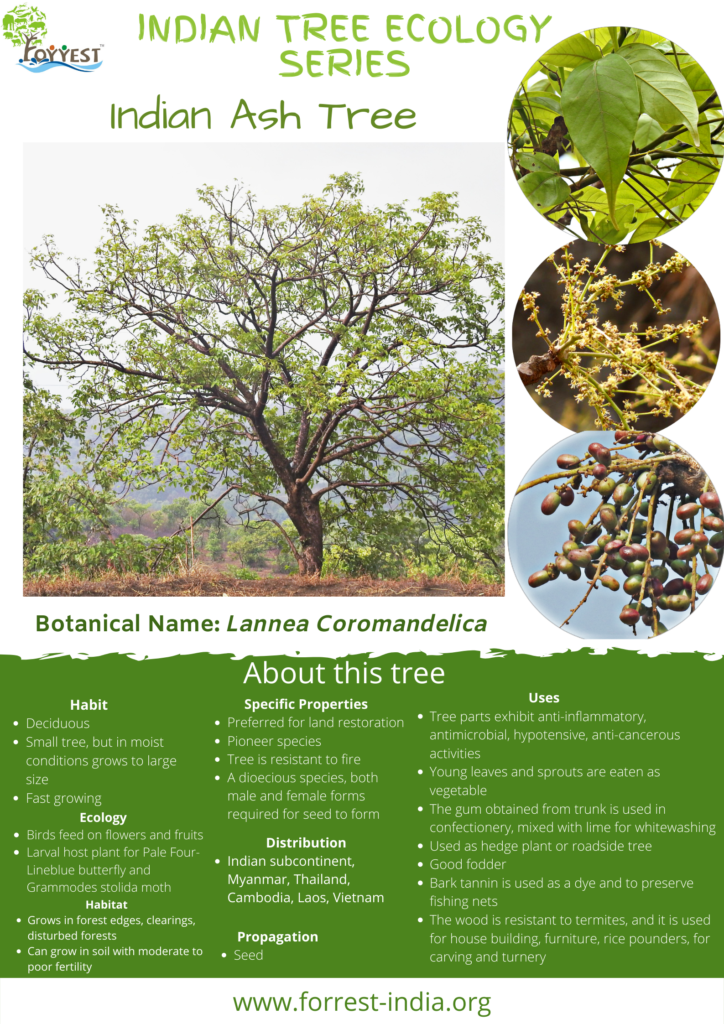
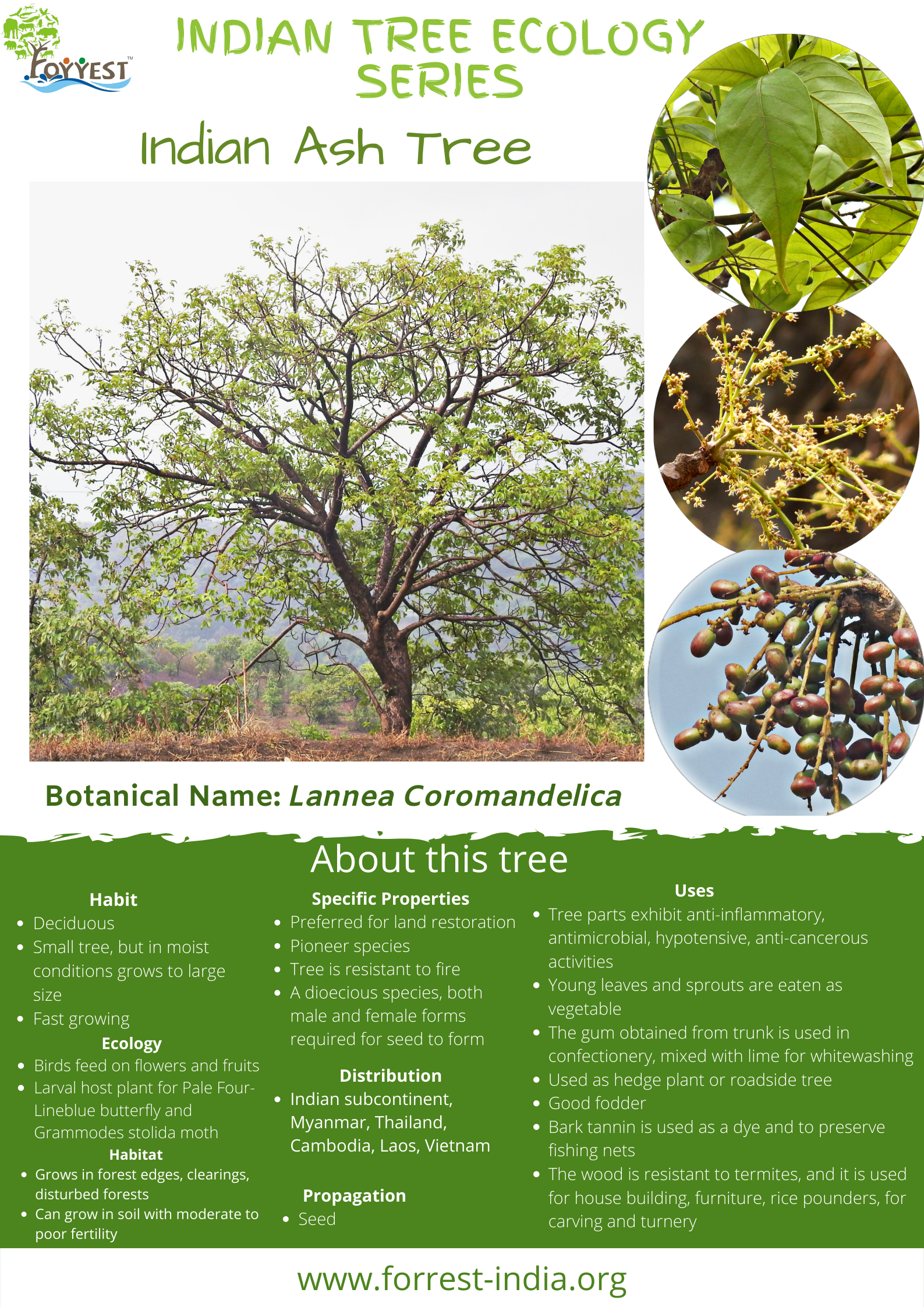
Lannea coromandelica

Botanical Name – Lannea coromandelica

Common Name  – Ajashringi, Jhingini (Sanskrit), Goonja, Gurjan, Mohin, Gurj, Gharri, Jhingan, Moyan, Moyal, Mavai, Saka, Ghodi (Hindi), Moi (Marathi), Mavedi (Gujrati)

Distribution- Himachal Pradesh, Uttar Pradesh, Bihar, West Bengal, Assam, Meghalaya, Arunachal Pradesh, Tripura, Orissa, Madhya Pradesh, Rajasthan, Gujarat, Maharashtra, Karnataka, Tamil Nadu, Kerala

Habit-

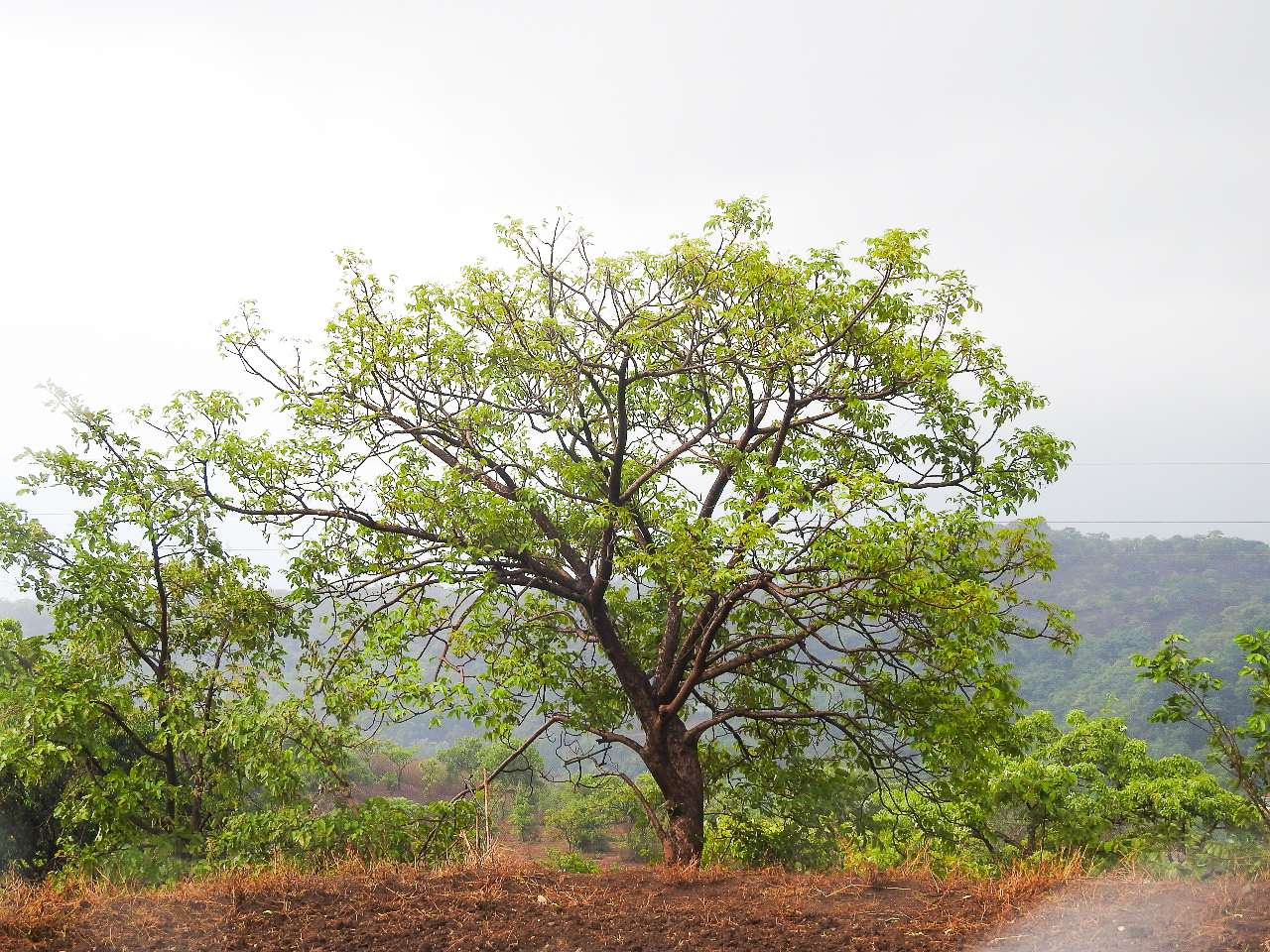
  • Medium sized deciduous tree in dry habitats, grows large in moist conditions
  • Fast growing

Habitat

  • Dry to moist deciduous forests
  • Grows in forest edges, clearings, disturbed forests

Specific properties

  • Can grow in soil with moderate to poor fertility
  • Disturbance tolerant species
  • Preferred for land restoration
  • Pioneer species
  • Tree is resistant to fire
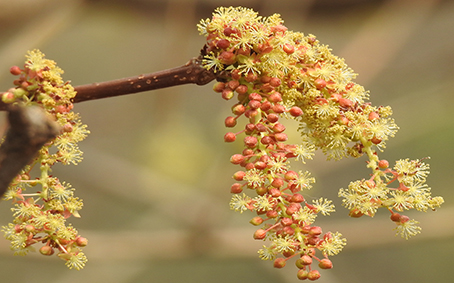
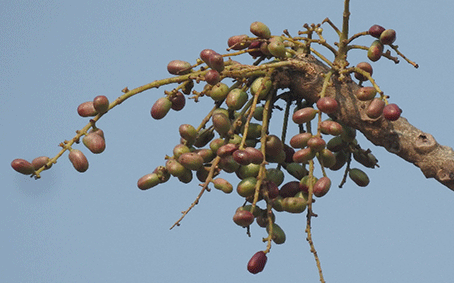
  • A dioecious species, both male and female forms required for seed to form

Ecology

  • Birds and squirrels feed on flowers and fruits
  • Moi pith and leaf tissues are high in starch content and are a favourite fodder of elephants
  • Lannea attracts a lot of insects and gets pollinated by them.
  • Larval host plant for Pale Four-Lineblue butterfly and Grammodes stolida moth

Uses

  • Tree parts exhibit anti-inflammatory, antimicrobial, hypotensive, anti-cancerous activities
  • Young leaves and sprouts are eaten as vegetable
  • The gum obtained from trunk is used in confectionery, mixed with lime for whitewashing
  • Used as hedge plant and as avenue tree
  • Good fodder
  • Bark tannin is used as a dye and to preserve fishing nets
  • The wood is resistant to termites, and it is used for house building, furniture, rice pounders, for carving and turnery
  • It is used in plywood for its excellent termite resistance properties

Propagation

  • Seeds and cuttings

Share this page

Facebook
X
LinkedIn
WhatsApp