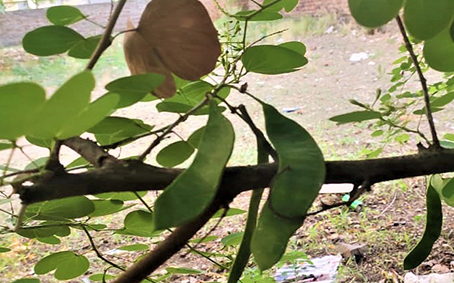
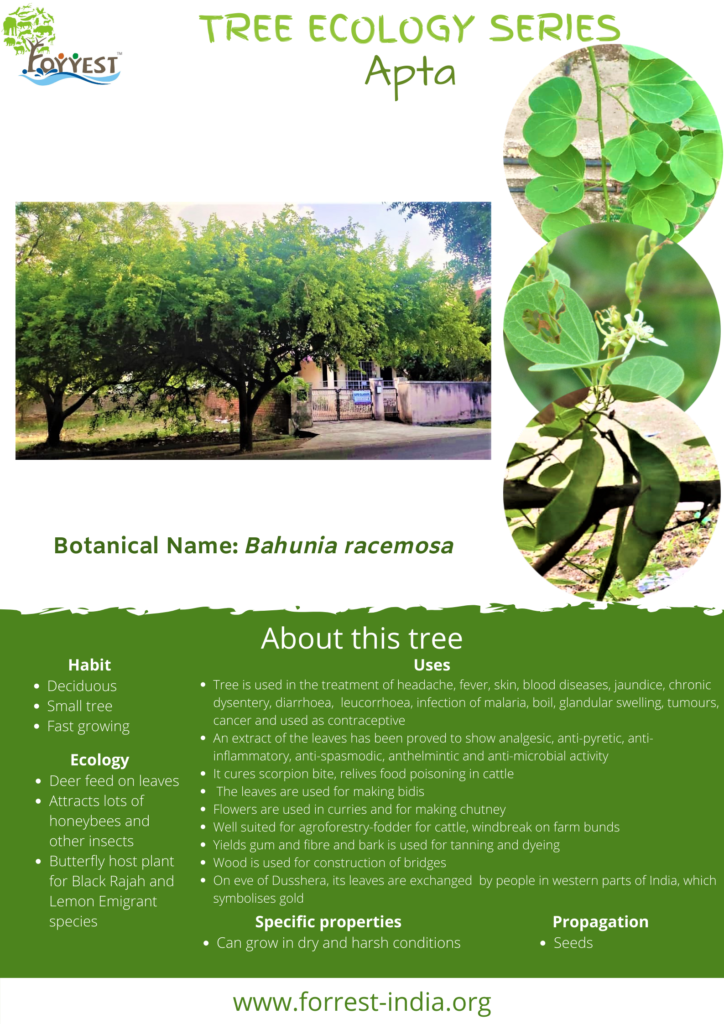
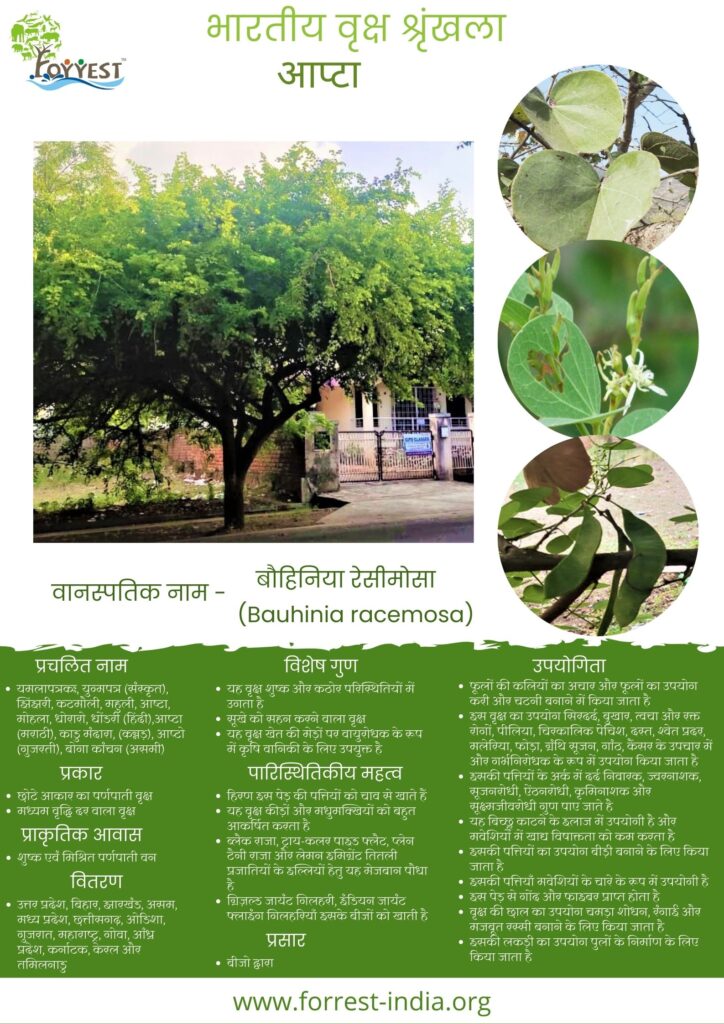
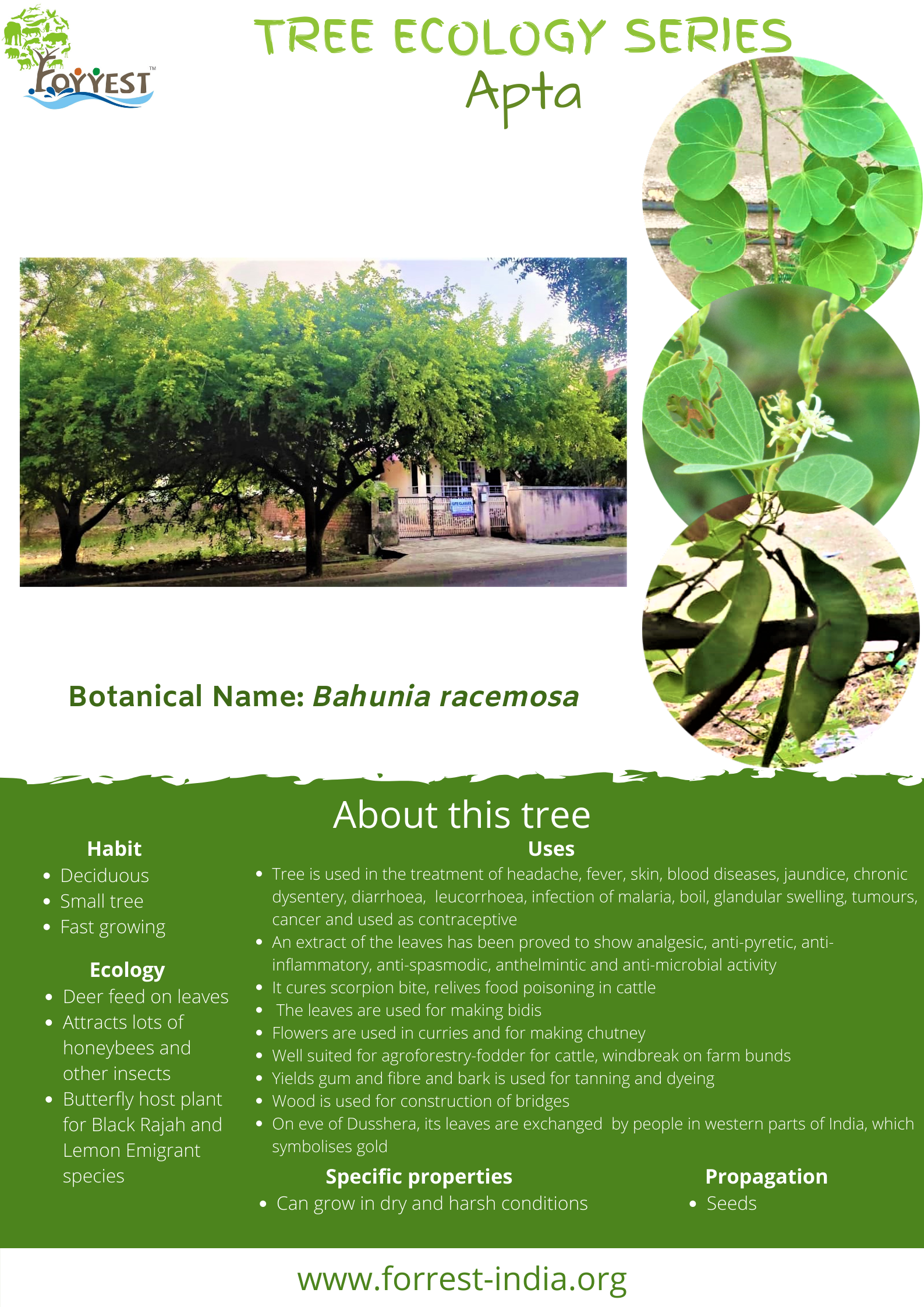
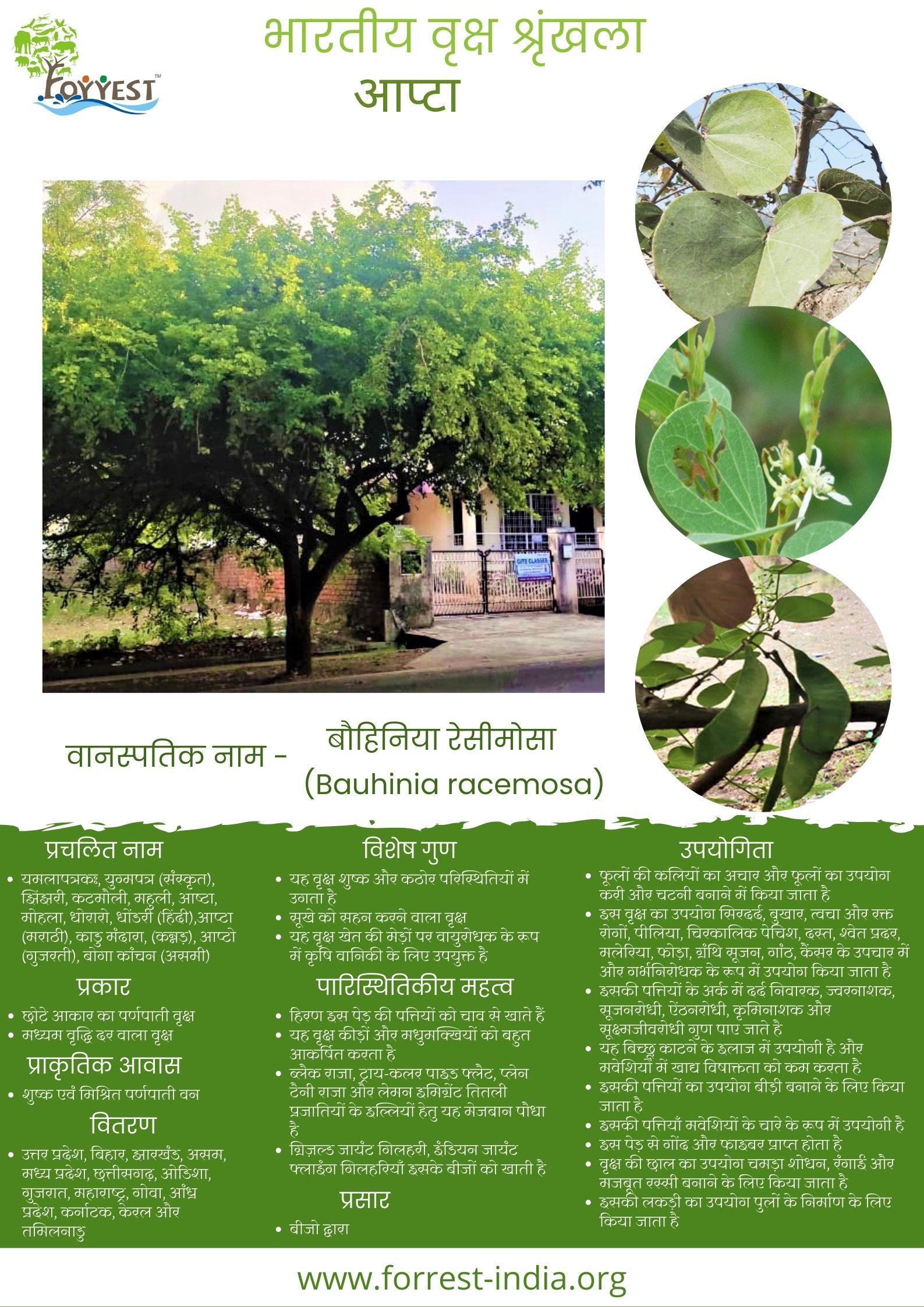
Common Name – Yamalapatrakah, Yugmapatra (Sanskrit) Jhinjheri, kathmauli, Mahuli, Aashta, Mohla, Dhoraro, Dhondri (Hindi), Apta (Marathi), Kadu mandhara, Basavana padha (Kannada), Apto (Gujrati), Boga Kanchan (Assam)
Distribution
Jharkhand, Chhattisgarh, Assam, Gujarat, Odisha, Maharashtra, Andhra Pradesh, Goa, Karnataka, Kerala, Tamil Nadu
Habit
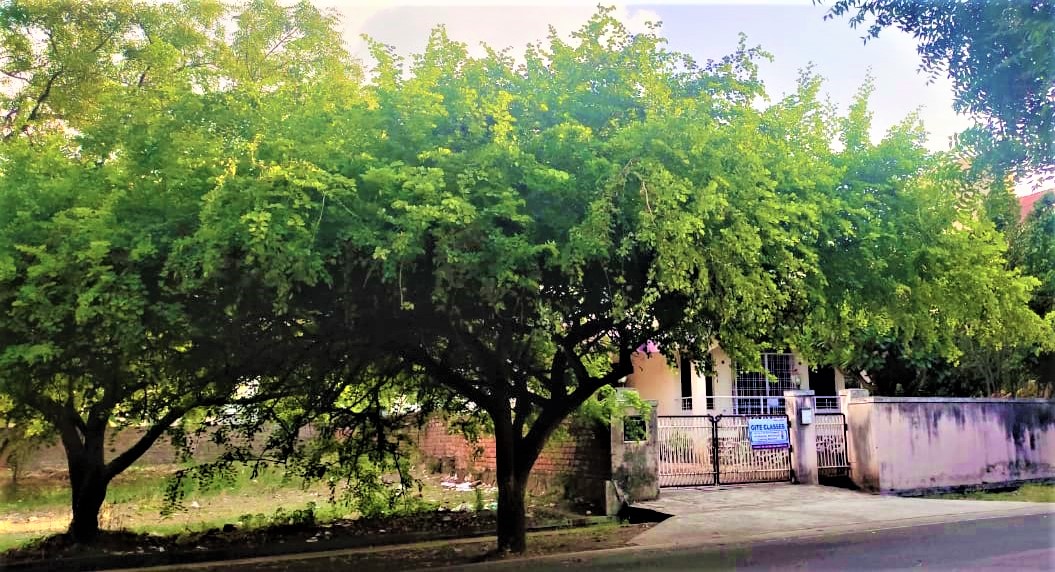
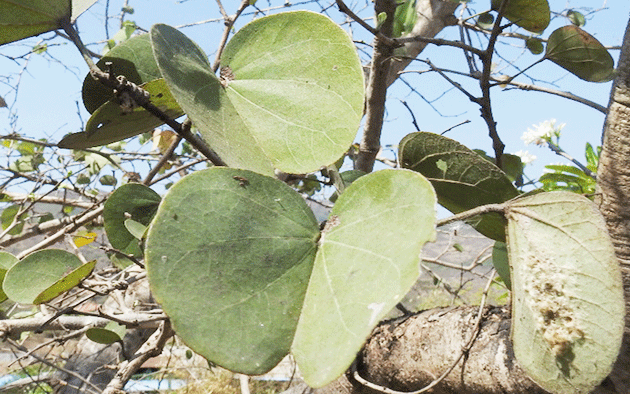
Small-sized deciduous tree
Moderate growth rate
Habitat
Dry deciduous and mixed deciduous forest
Specific Properties
Can grow in dry and harsh conditions
Drought tolerant
Suitable for farm forestry as windbreak on farm bunds
Ecology
Deer feed on leaves
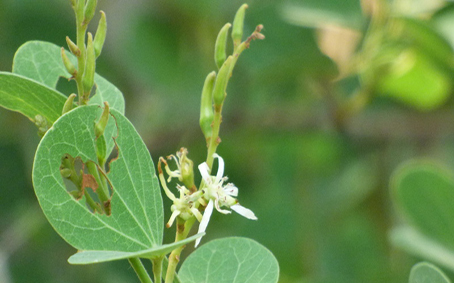
Attracts lots of honeybees and other insects
Larval host plant for Black Rajah, Tricolour Pied Flat, Plain Tawny Rajah and Lemon Emigrant butterfly species
Grizzled giant squirrel, Indian Giant Flying Squirrel feeds on seeds
Uses
Flower buds are pickled and eaten
Tree is used in the treatment of headache, fever, skin & blood diseases, jaundice, chronic dysentery, diarrhoea, leucorrhoea, infection of malaria, boil, glandular swelling, tumours, cancer & used as contraceptive
An extract of the leaves has been proved to show analgesic, anti-pyretic, anti-inflammatory, anti-spasmodic, anthelmintic and anti-microbial activity
It cures scorpion bite, relives food poisoning in cattle
The leaves are used for making bidis
Flowers are used in curries and for making chutney
Leaves as fodder for cattle
Yields gum and fibre
Bark is used for tanning, dyeing and making good quality rope