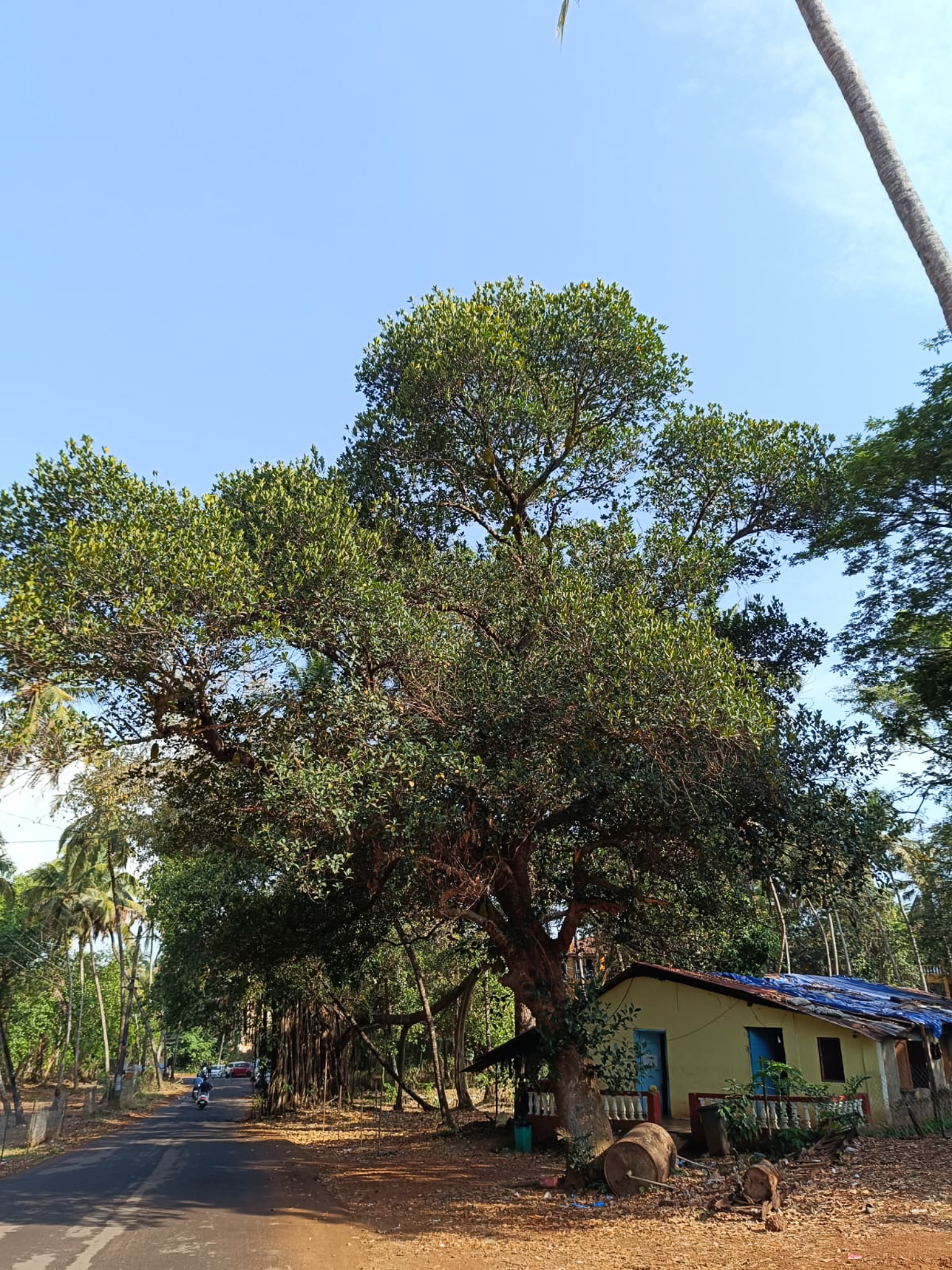
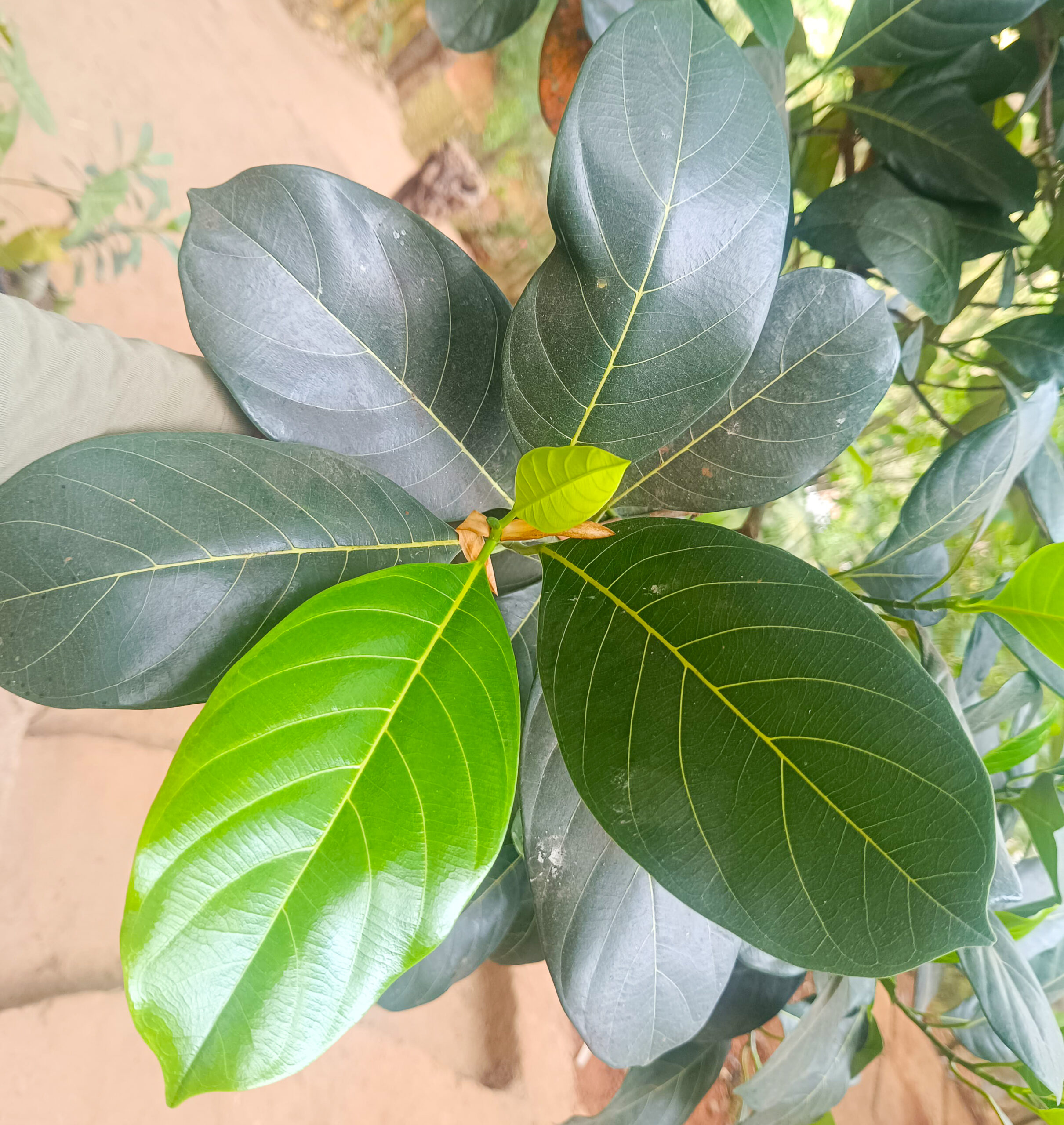
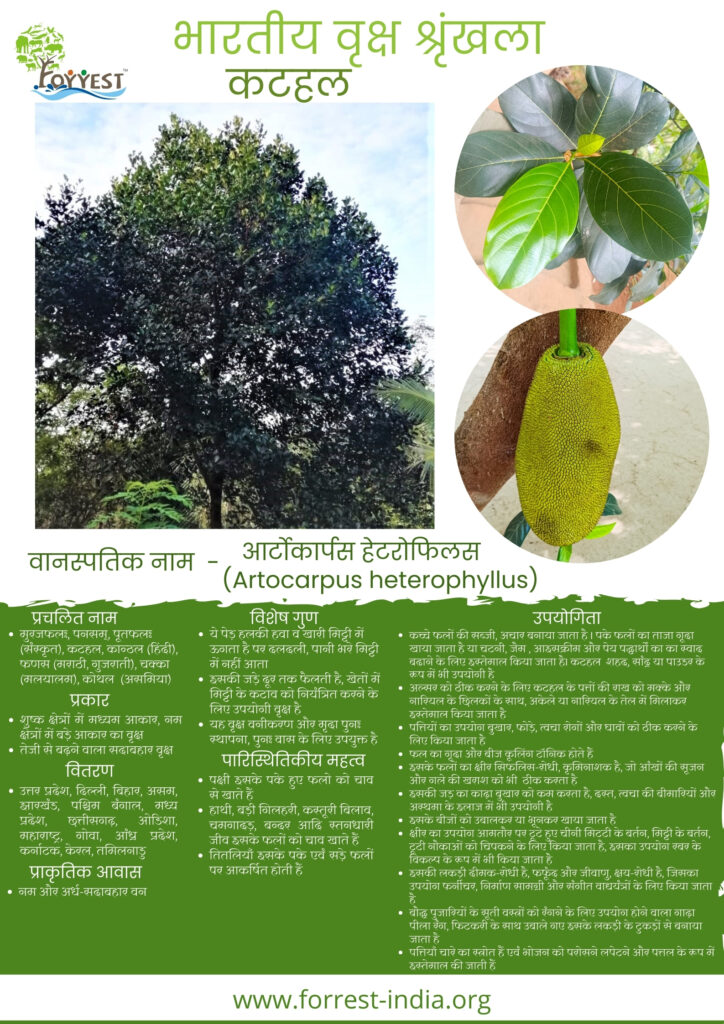
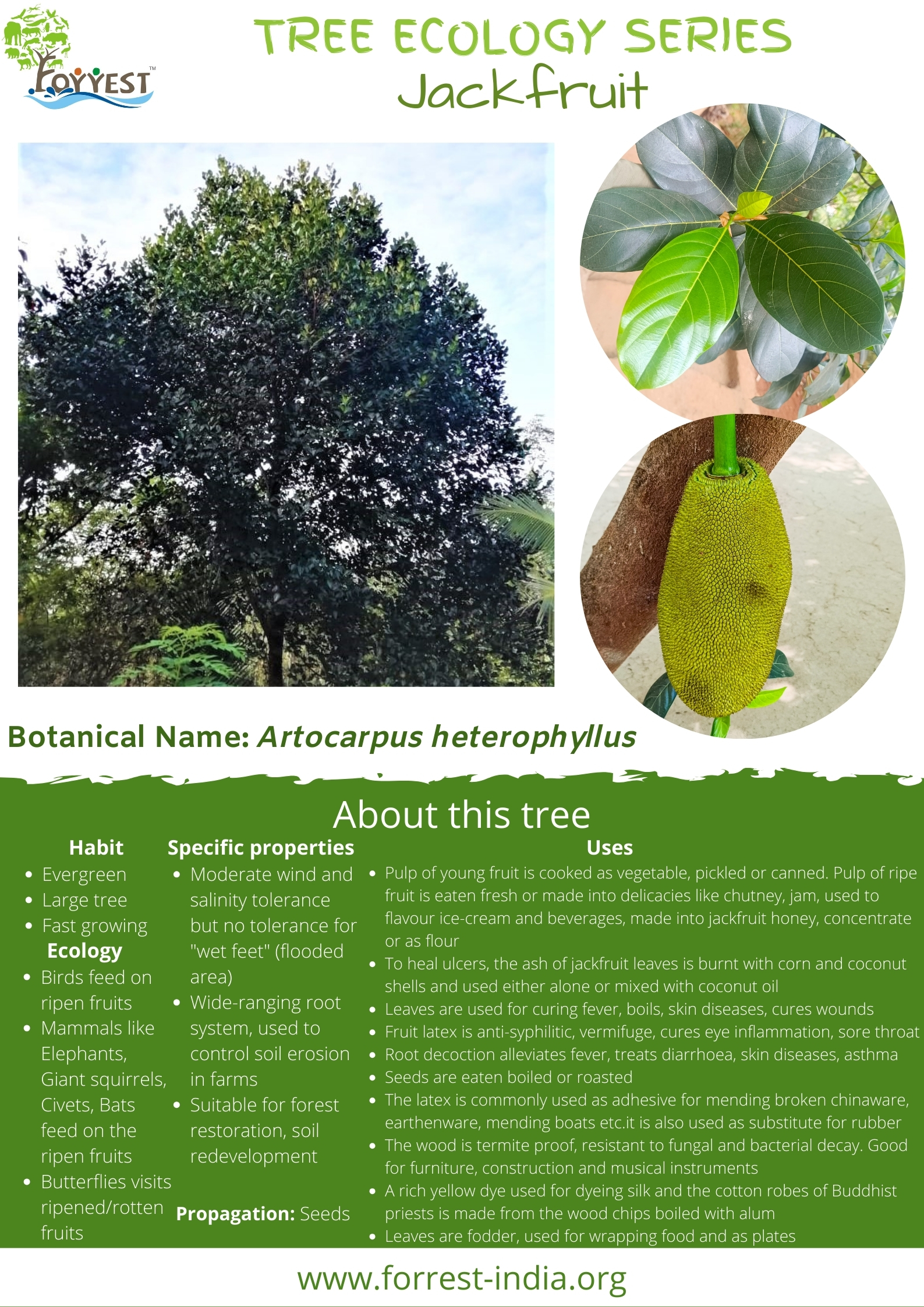
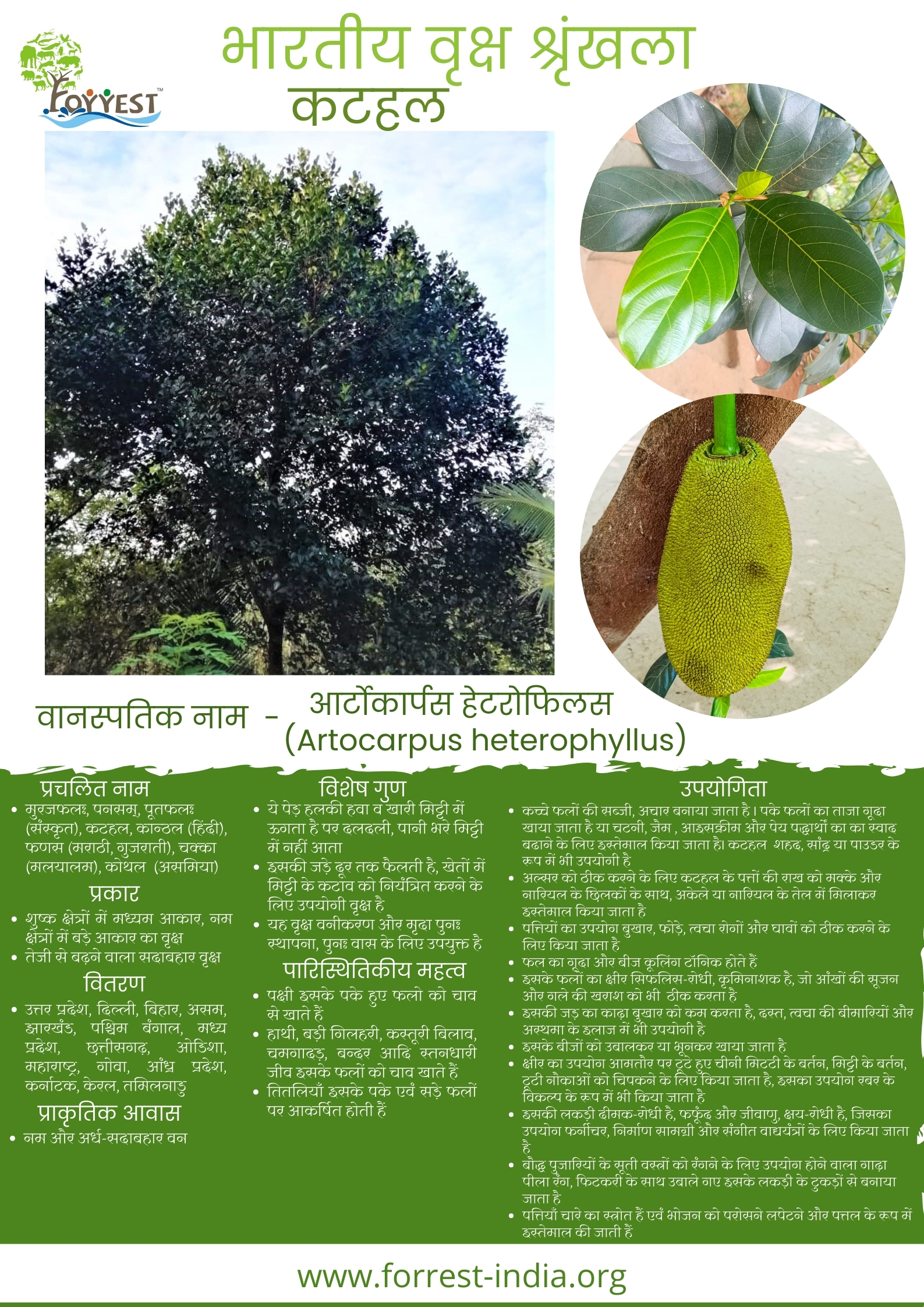
Medium sized in dry areas, large sized in moist areas
Evergreen tree
Fast growing
Habitat
Moist and semi-evergreen forests
Distribution
Uttar Pradesh, Delhi, Bihar, Assam, Jharkhand, West Bengal, Madhya Pradesh, Chhattisgarh, Odisha, Maharashtra, Goa, Andhra Pradesh, Karnataka, Kerala, Tamil Nadu
Specific properties
Moderate wind and salinity tolerance but no tolerance for “wet feet” (flooded area)
Wide-ranging root system, used to control soil erosion in farms
Suitable for forest restoration, soil redevelopment
Ecology
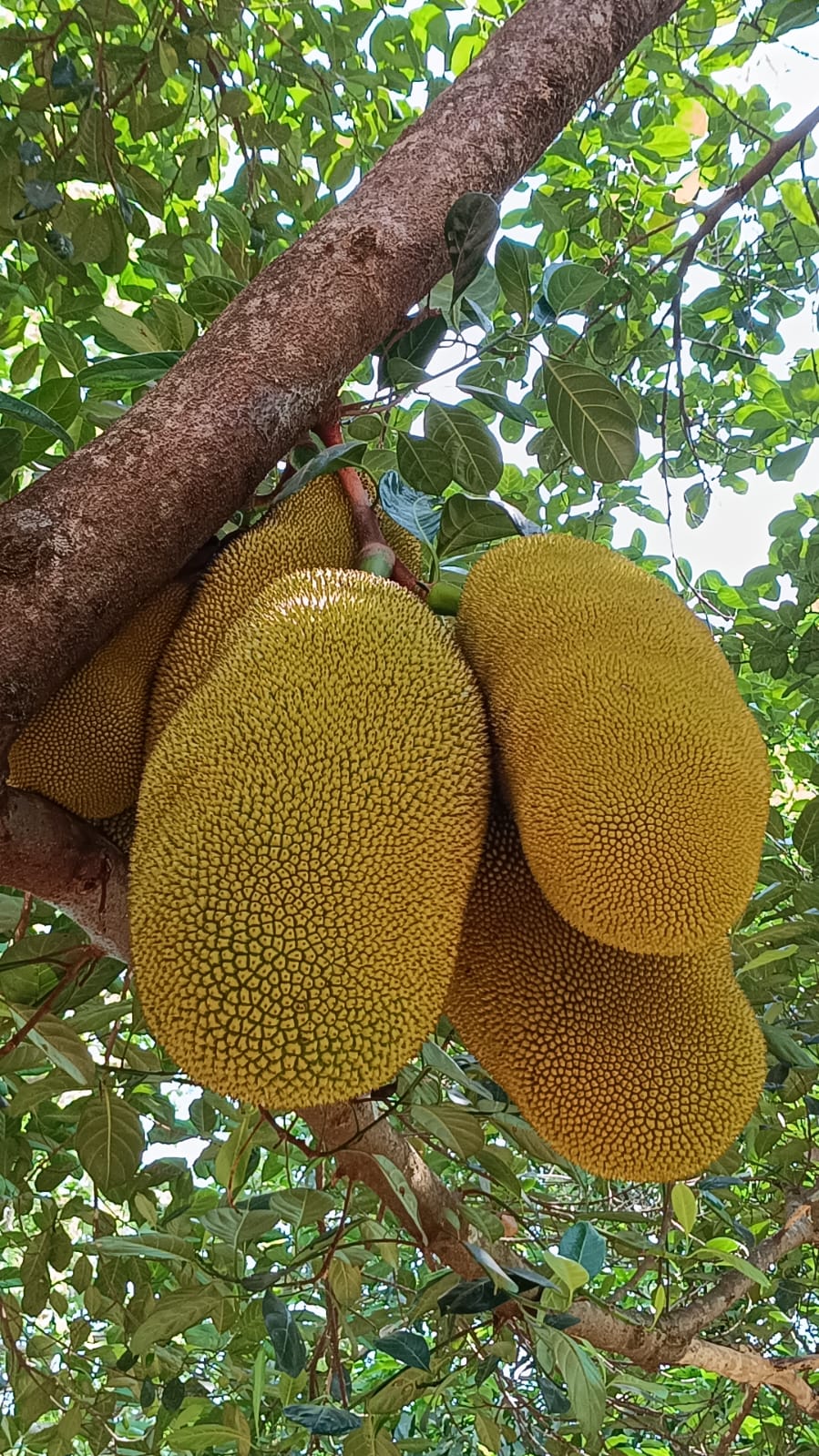
Birds feed on ripens fruits
Mammals like Elephants, Giant squirrels, Civets, Bats feed on the ripen fruits
Butterfly’s visits ripened/rotten fruits
Uses
Pulp of young fruit is cooked as vegetable, pickled or canned. Pulp of ripe fruit is eaten fresh or made into delicacies like chutney, jam, used to flavour ice-cream and beverages, made into jackfruit honey, concentrate or powder form
To heal ulcers, the ash of jackfruit leaves is burnt with corn and coconut shells and used either alone or mixed with coconut oil
Leaves are used for curing fever, boils, skin diseases and wounds
Pulp and seeds of the fruit are cooling tonic
Fruit latex is anti-syphilitic, vermifuge, cures eye inflammation and sore throat
A root decoction alleviates fever, treats diarrhoea, skin diseases and asthma
Seeds are eaten boiled or roasted
The latex is commonly used as adhesive for mending broken chinaware, earthenware, mending boats etc, it is also used as substitute for rubber
The wood is termite proof, resistant to fungal and bacterial decay. Good for furniture, for construction and musical instruments
A rich yellow dye used for dyeing silk and the cotton robes of Buddhist priests is made from the wood chips boiled with alum
Leaves are fodder and also used for wrapping food and as plates