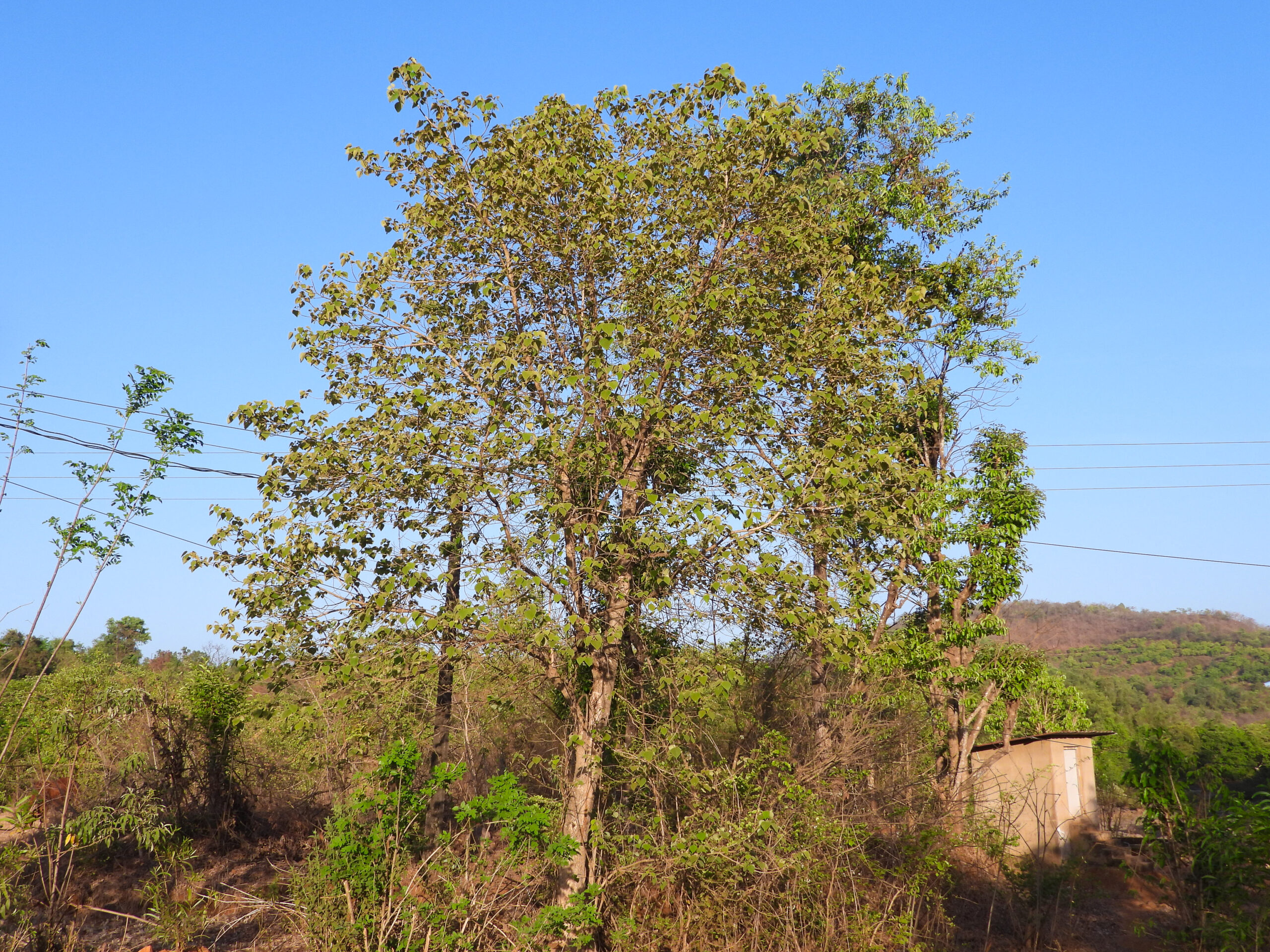
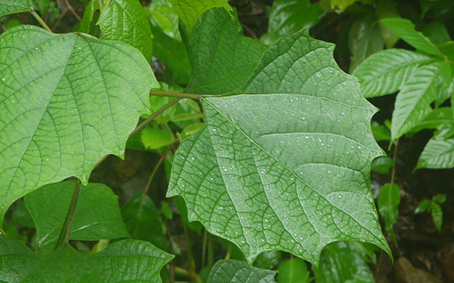
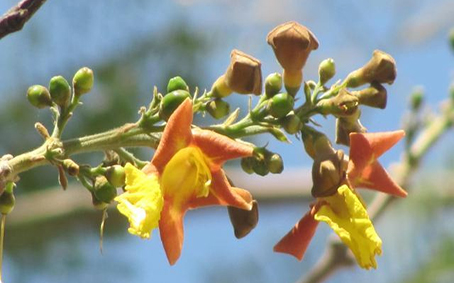
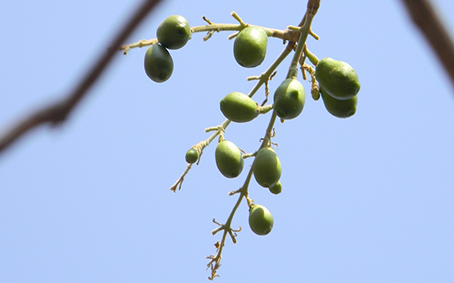
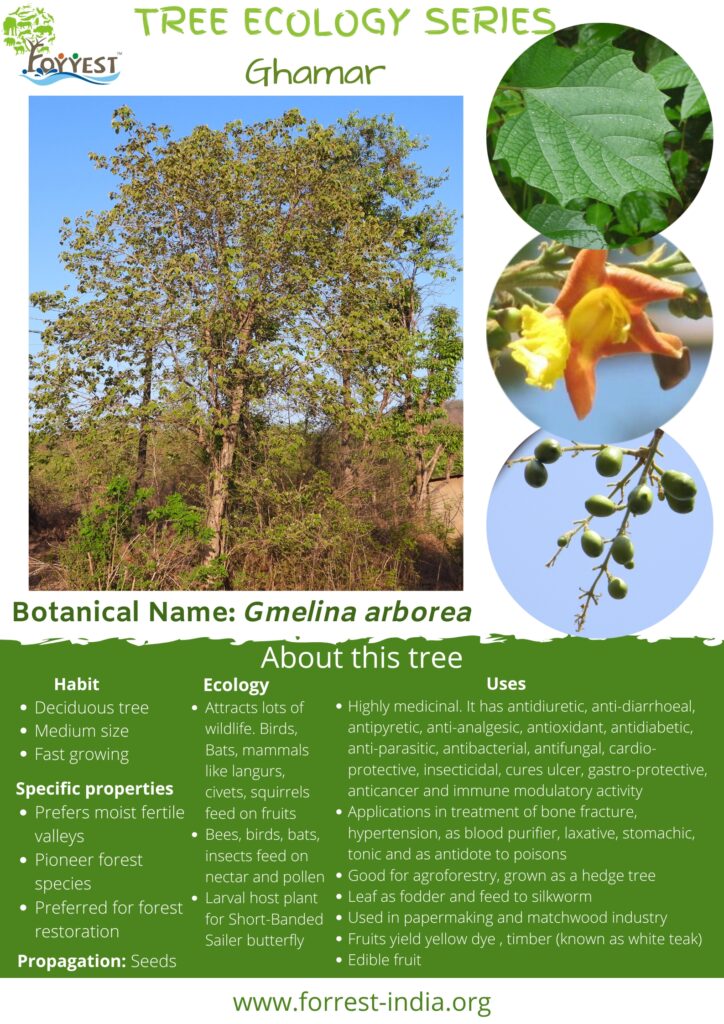
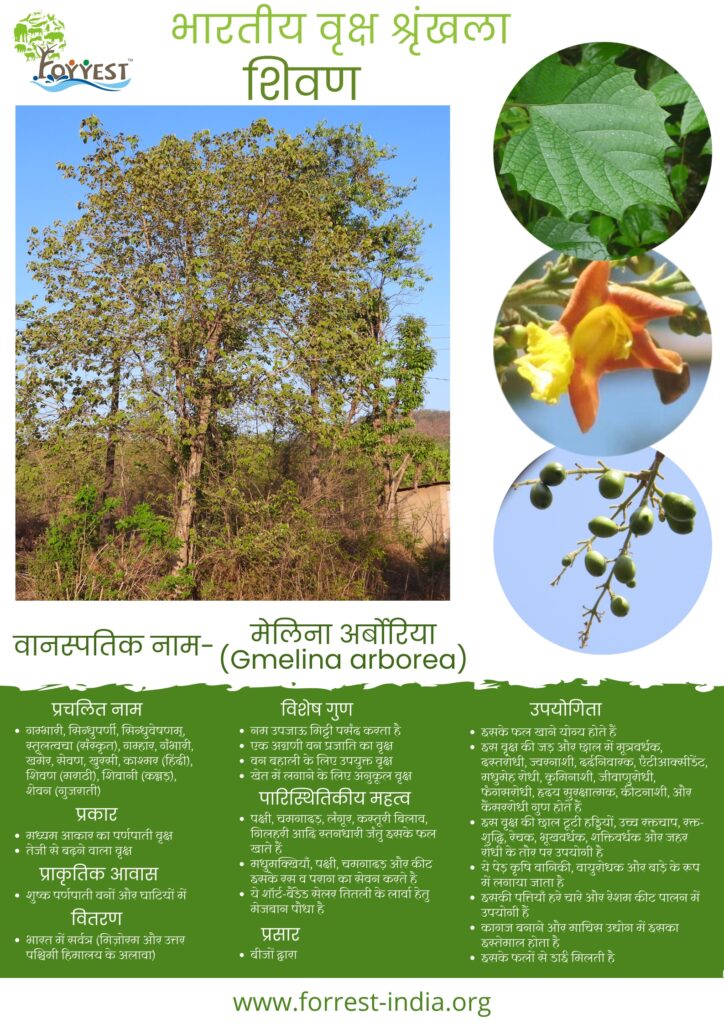
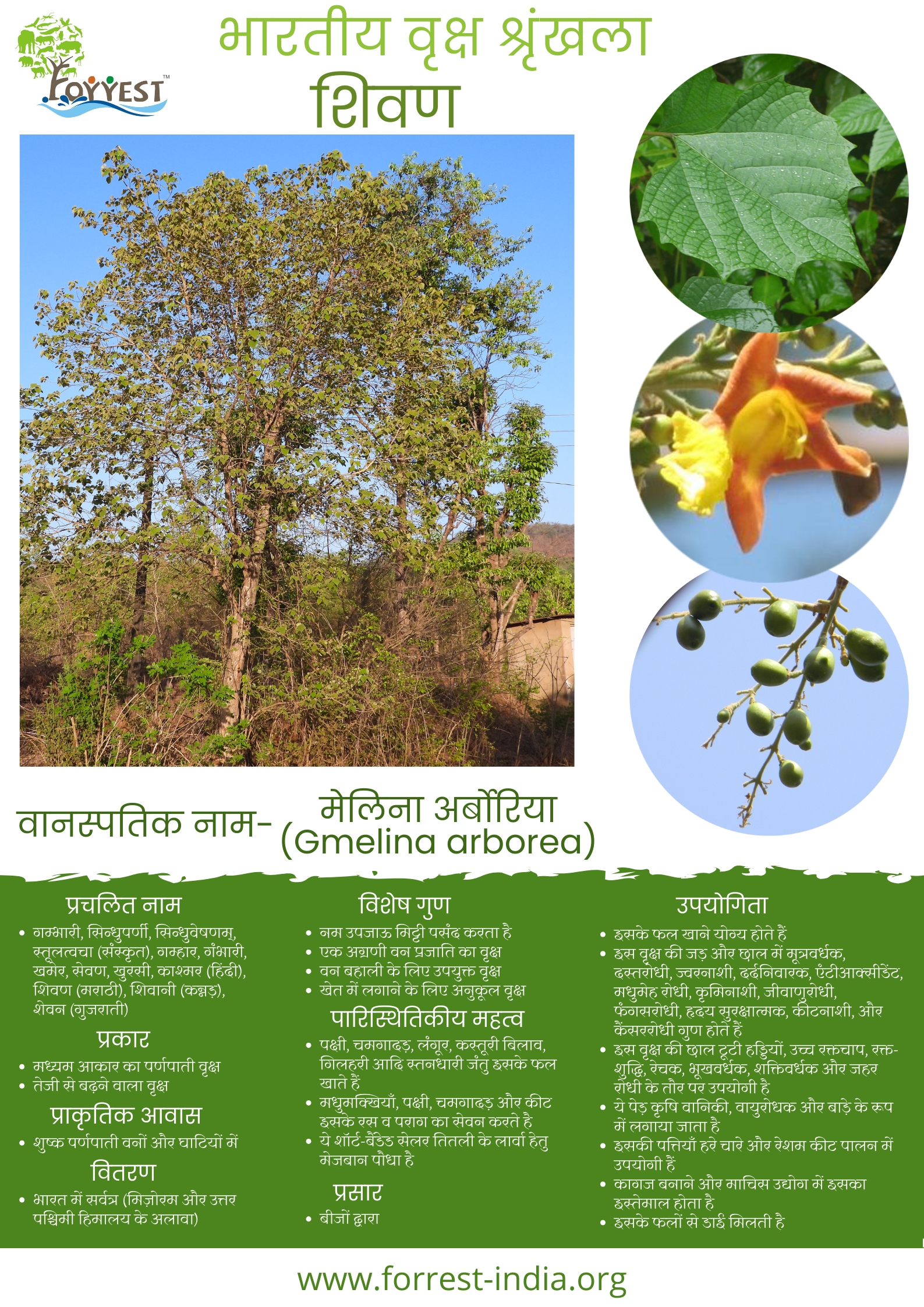
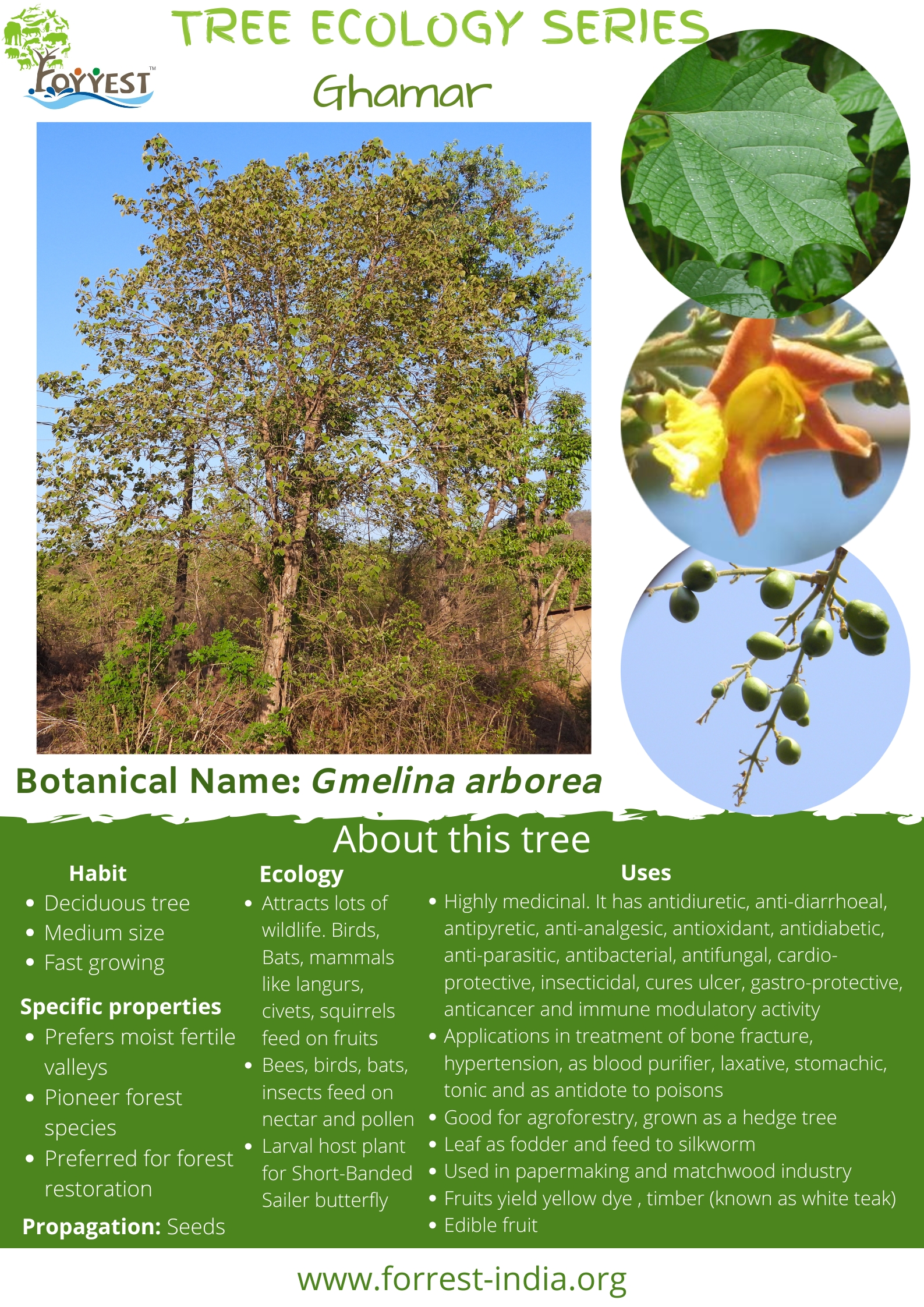
Gmelina arborea
Botanical Name – Gmelina arborea
Common Name – Gambhari, Sindhuparni, Sindhuveshanam, Stulatvacha (Sanskrit), Ghamar, Khamer, Kumar, Sevan, Khursi, Kassamar (Hindi), Shivan (Marathi), Shivan (Gujrati)
Distribution – Throughout India (except Mizoram & Northwest Himalayas)
Habit
- Medium sized deciduous tree
- Fast growing
Habitat
- Dry deciduous forest
- Valleys
Specific Properties
- Prefers moist fertile soils
- Pioneer forest species
- Preferred for forest restoration
- Good for growing on farms
Ecology
- Birds, Bats, Mammals like langurs, civets, squirrels feed on fruits
- Bees, birds, bats, insects feed on nectar and pollen
- Larval host plant for Short-Banded Sailer butterfly
Uses
- Fruits are edible
- It has antidiuretic, anti-diarrhoeal, antipyretic, anti-analgesic, antioxidant, antidiabetic, anti-helminthic, antibacterial, antifungal, cardio-protective, insecticidal, and anticancer properties
- Applications in treatment of bone fracture, hypertension, as blood purifier, laxative, stomachic, tonic and as antidote to poisons
- Good for agroforestry, grown as a windbreak and as hedge
- Leaf as fodder and good for rearing silkworms
- Used in papermaking and in matchwood industry
- Fruits yield yellow dye
Propagation
Seeds
Share this page
Facebook
Twitter
LinkedIn
Tagged Tree Ecology Series