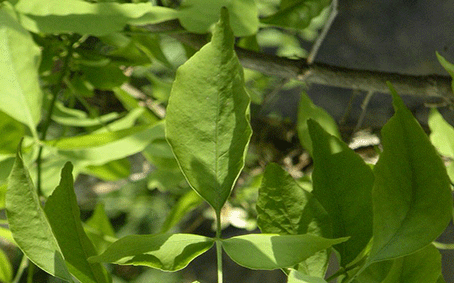
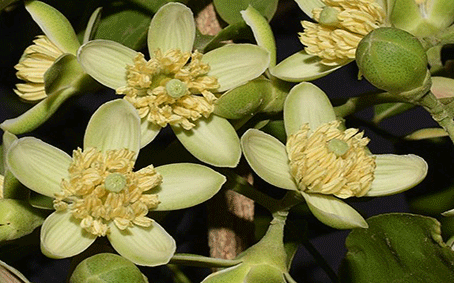
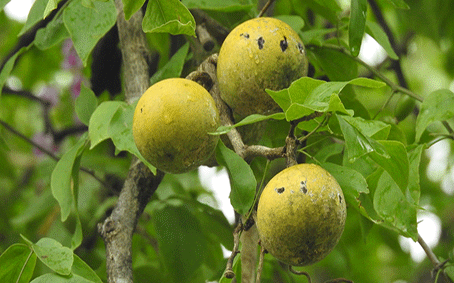
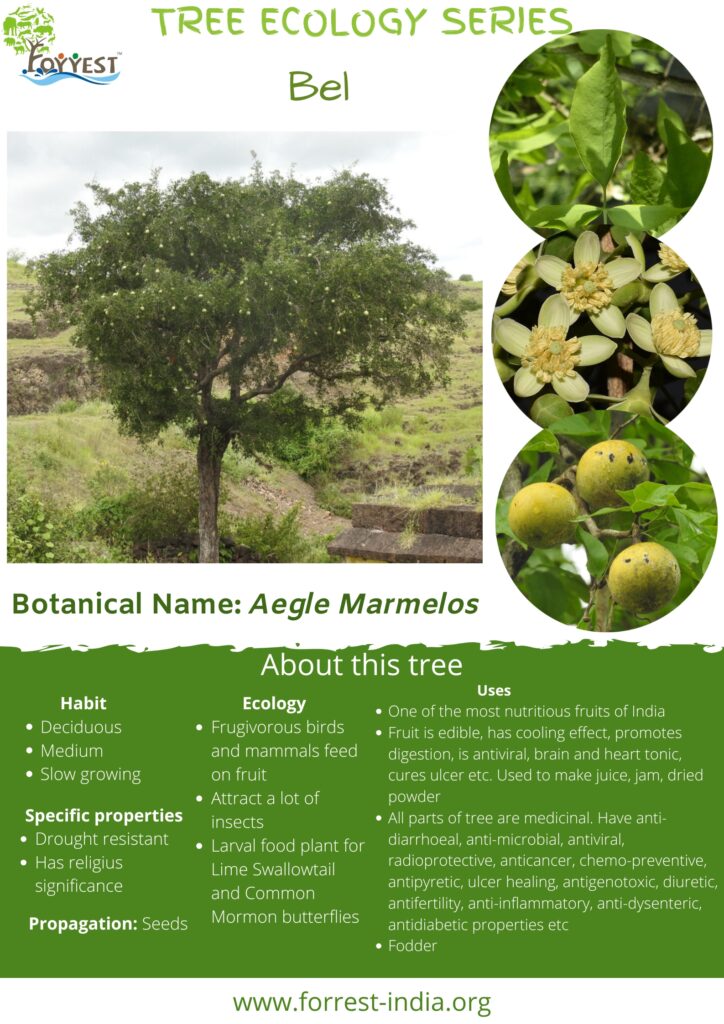
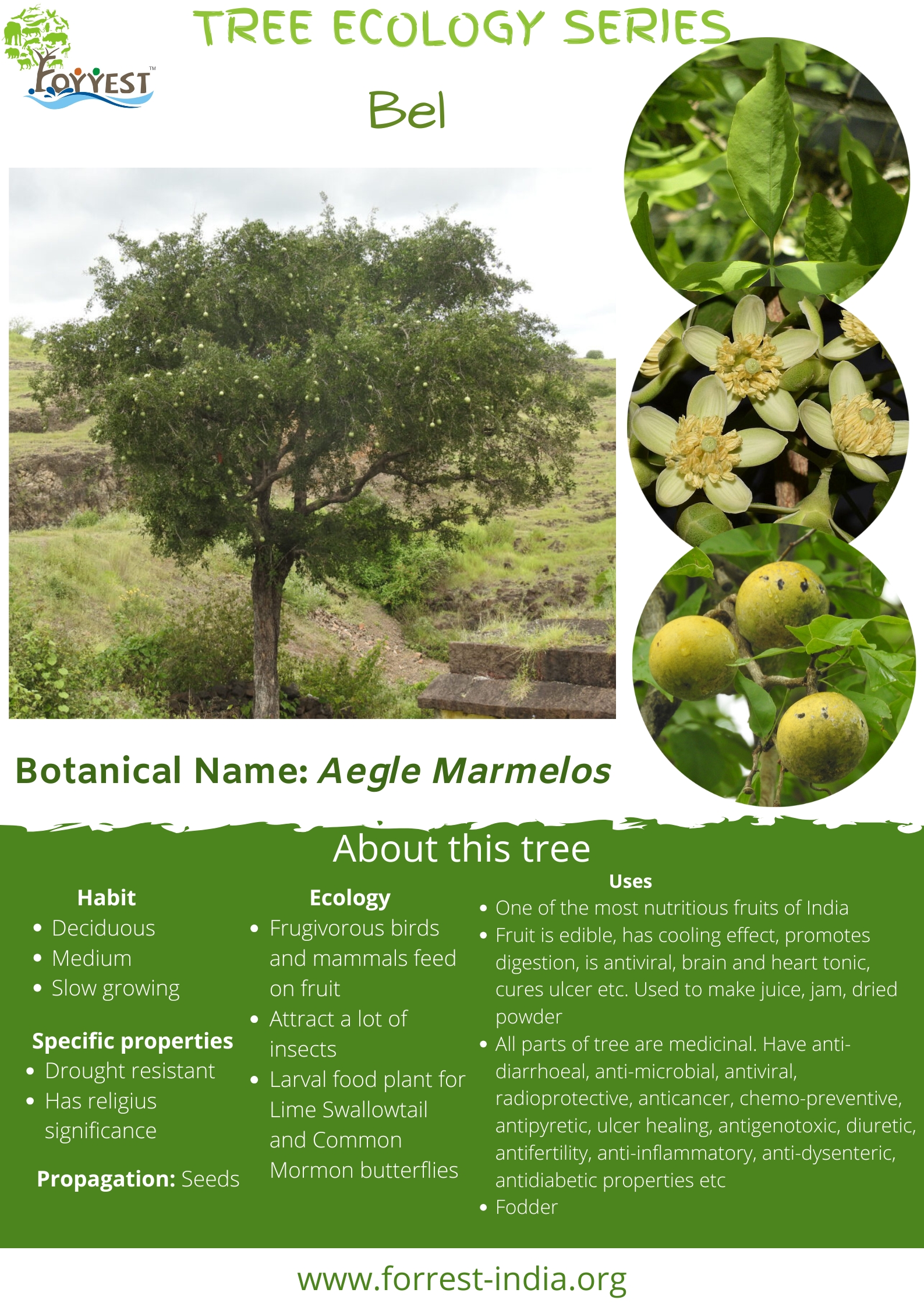
Common Name – Amritavah, bailvalyam, Bilvah, Bilvalvam, Hridyagandhah, Lakshmiphalah, Satyaphalah, (Sanskrit), Mahaka, Bilva, Bel, Bel-pattar, Bel-patti, Sirphal (Hindi) Bael (Marathi), Bilva (Kannada), Pathre (Malayalam), Bili (Gujrati)
IUCN Status– Near Threatened (2024)
Habit
Medium deciduous tree
Slow growing
Habitat
Dry and moist deciduous forest
Distribution – Jammu and Kashmir, Himachal Pradesh, Punjab, Haryana, Delhi, Uttar Pradesh, Rajasthan, Bihar, West Bengal, Madhya Pradesh, Maharashtra, Karnataka, Andhra Pradesh, Tamil Nadu, Kerala, Delhi
Specific Properties
Drought resistant
It endures poor soils
Good for land reforestation
Ecology
Frugivorous birds and mammals feed on fruit specially Monkeys and Bears.
Attract a lot of insects like beetles, bugs
Larval food plant for Lime Swallowtail, Blue Mormon and Common Mormon butterflies
Bael is an excellent bee-forage
Uses
One of the most nutritious fruits of India, its therapeutic and medicinal properties have known since ages. All parts of tree are medicinal having anti-diarrhoeal, anti-microbial, antiviral, radioprotective, anticancer, chemo-preventive, antipyretic, ulcer healing, antigenotoxic, diuretic, antifertility, anti-inflammatory, anti-dysenteric, antidiabetic properties.
Fruit is edible, has cooling effect, promotes digestion, is antiviral, brain and heart tonic, cures ulcer and is used to make juice, jam, dried powder.
The pale yellowish wood is strong and hard and used to make pestles for oil mills, tool handles and for small-scale turnery
The fruit, leaf and root-bark have proven tonic, antibiotic, digestive and anti-inflammatory properties and are used in the treatment of snakebite, dysentery and other diseases of the digestive system, heart, eye, skin and liver