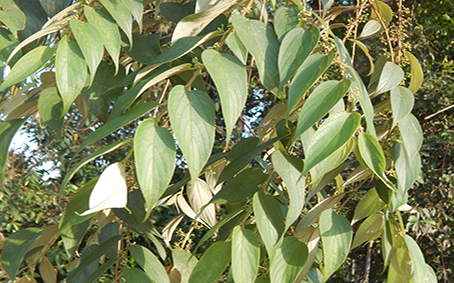
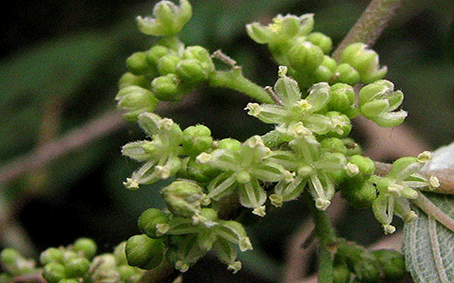
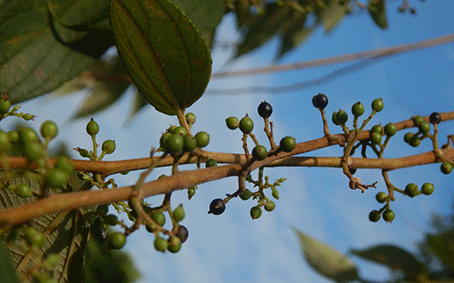
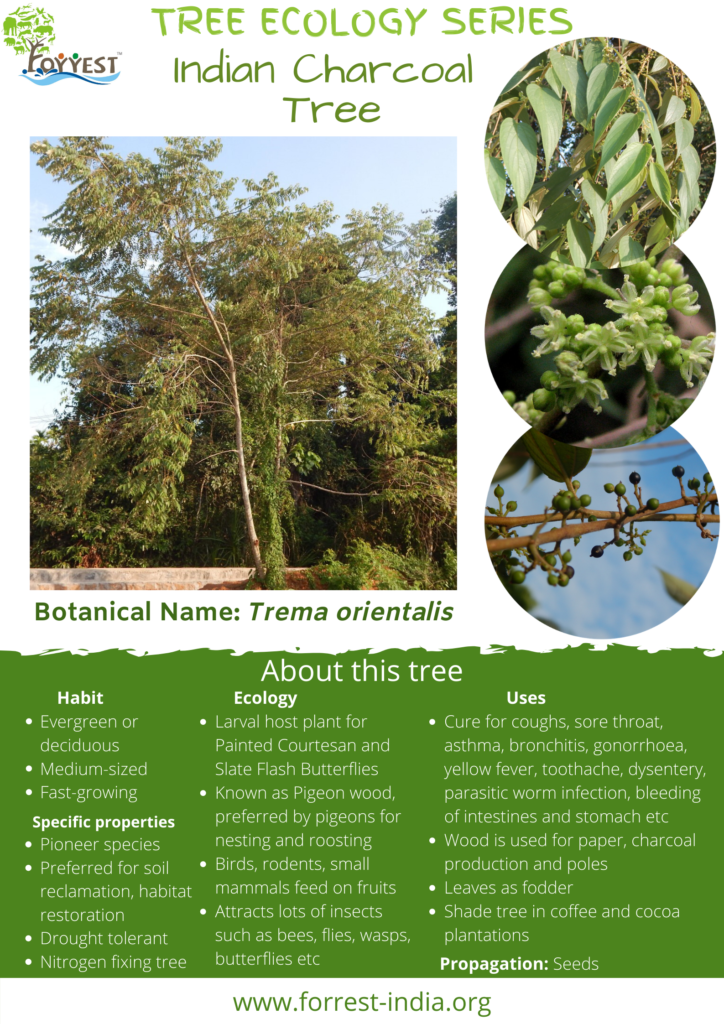
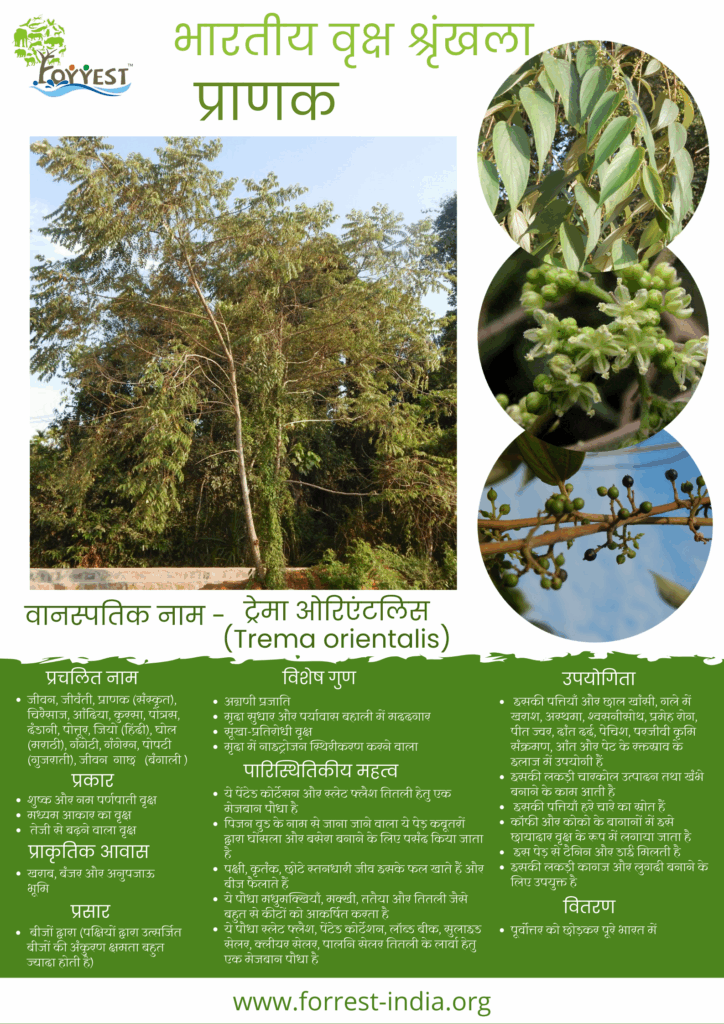
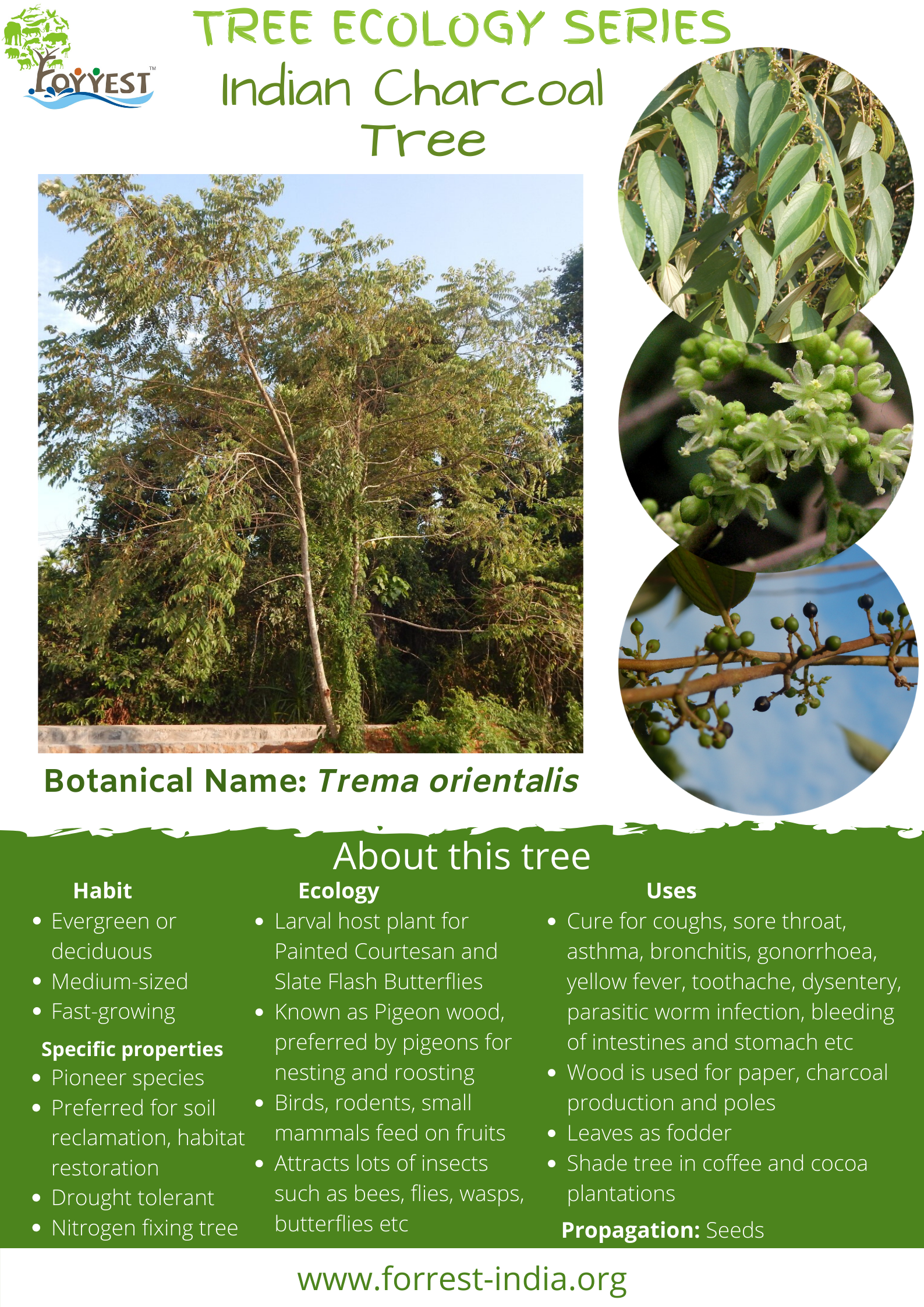
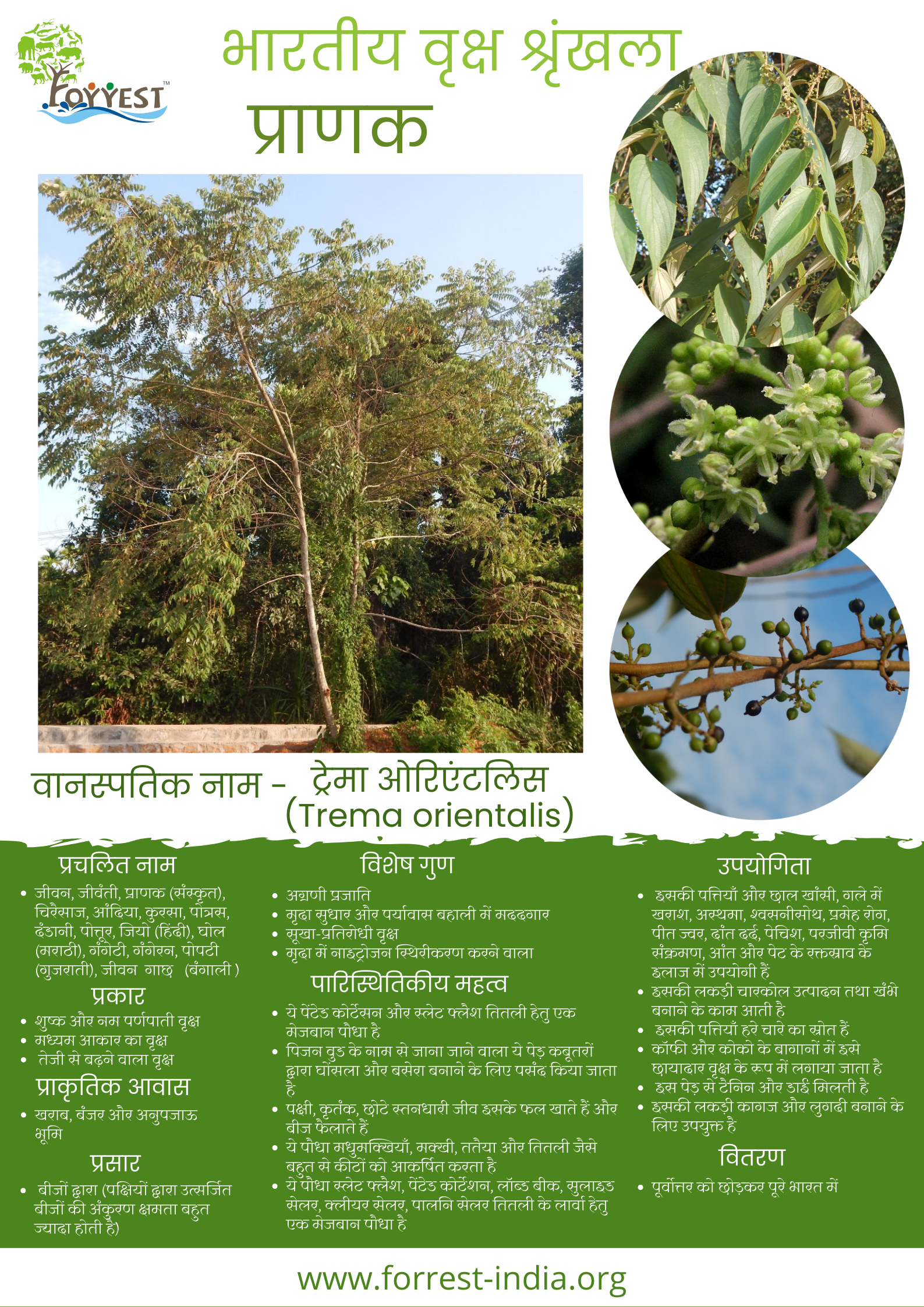
Common Name – Indian Charcoal Tree (English), Jivani, Jivanti, Pranaka (Sanskrit), Chiraisaaj, Andia, Kursa, Pothras, Dandanni, Pottur, Jiyo (Hindi), Ghol (Marathi), Karu male (Kannada), Popti (Gujrati), Jivan gaach (Bengali)
Habit-
Dry and moist deciduous
Medium-sized
Fast-growing
Habitat
Disturbed in barren areas
Distribution – Madhya Pradesh, Chhattisgarh, Jharkhand, Maharashtra, Odisha, Karnataka, Andhra Pradesh, Kerala
Specific properties
Pioneer species
Preferred for soil reclamation and habitat restoration
Drought tolerant
Nitrogen fixing tree
Ecology
Larval host plant for Painted Courtesan and Slate Flash Butterflies
Known as Pigeon wood, preferred by pigeons for nesting and roosting
Birds, rodents, small mammals feed on fruits and act as seed dispersals
Attracts lots of insects such as bees, flies, wasps, butterflies
Larval host plant for-
Rapala manea- Slate Flash
Euripus consimilis – Painted Courtesan
Libythea Laius – Lobed Beak
Neptis clinia- Sullied Sailer
Neptis nata – ClearSailer
Neptis palnica – Palni Sailer
Uses
The leaves and bark are used to treat coughs, sore throat, asthma, bronchitis, gonorrhoea, yellow fever, toothache, dysentery, parasitic worm infection, bleeding of intestines and stomach etc
Wood is used for charcoal production and manufacturing of poles
Leaves are used as fodder
Shade tree in coffee and cocoa plantations
Rich in tannin, yields dye
The wood is suitable for paper and pulp production
The bark is used for making string or rope, and used for waterproofing fishing-lines
Propagation
Seeds (seeds excreted from birds have very high rate of germination)