Shape

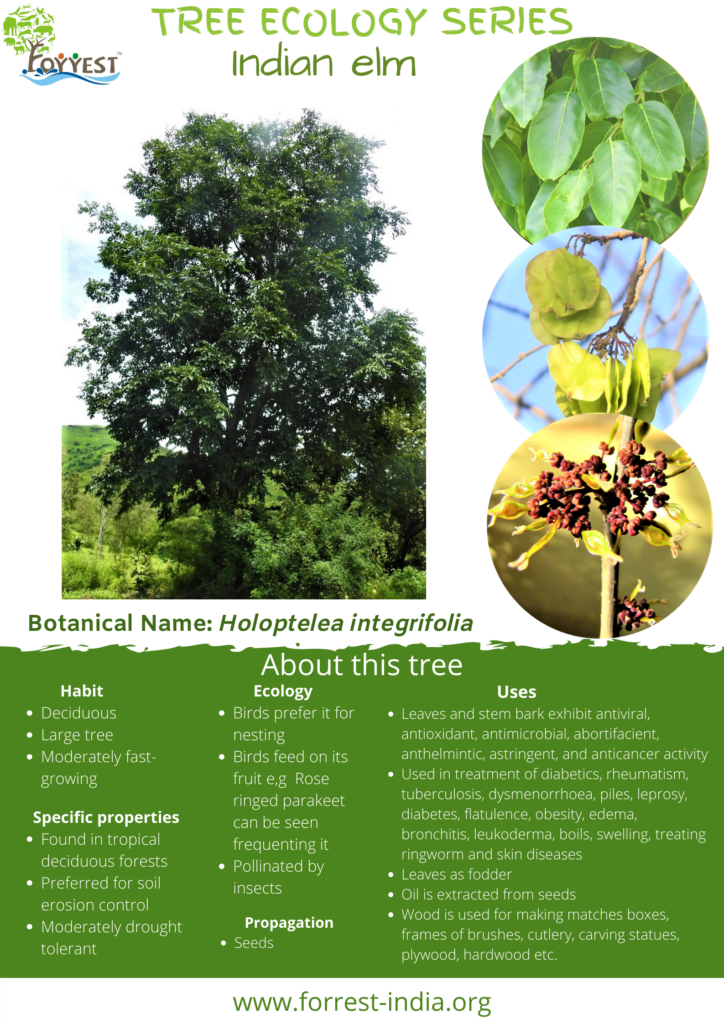
Holoptelea integrifolia

Botanical Name – Holoptelea integrifolia

Common Name – Indian elm, Chirivilva (Sanskrit), Karanji, Chilla, Chirhol, Chilbil, Papdi, Chudail papdi (Hindi), Waval (Marathi), Thappichan maram (Tamil), Nemali nara (Telugu)

Distribution – Delhi, Haryana, Uttar Pradesh, Madhya Pradesh, Chhattisgarh, Gujrat, Maharashtra, Telangana, Tamil Nadu, Karnataka, Kerala

Habit

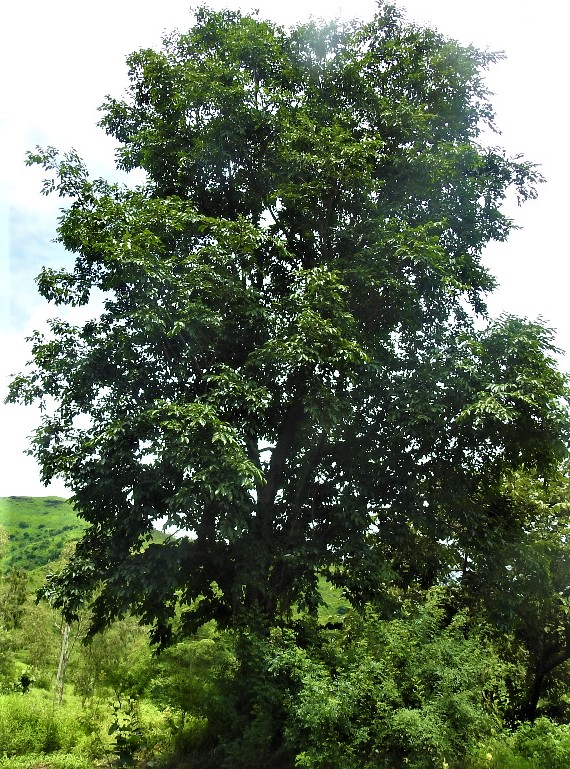
  • Large deciduous tree
  • Fast-growing

Habitat

  • Dry deciduous to semievergreen forest

Specific properties

  • Found in tropical deciduous forests
  • Preferred for soil erosion control
  • Moderately drought tolerant

Ecology

  • Birds prefer it for nesting
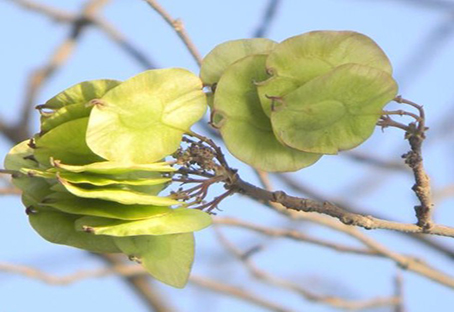
  • Birds feed on its fruit
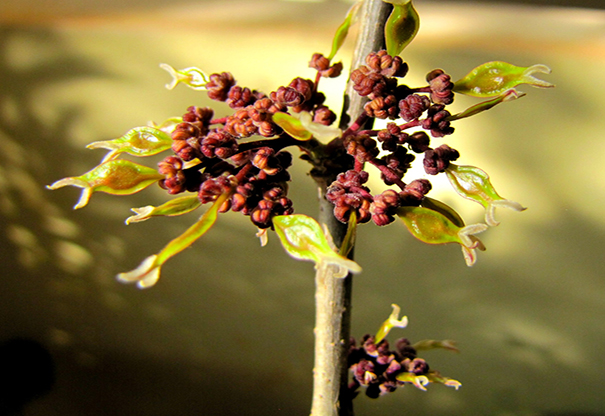
  • Pollinated by insects
  • Deer and rabbits relish the bark of the tree
  • Larval host plant of Plains cupid butterfly

Uses

  • Leaves and stem bark exhibit antiviral, antioxidant, antimicrobial, abortifacient, anthelmintic, astringent, and anticancer activity.
  • Used in treatment of diabetics, rheumatism, tuberculosis, dysmenorrhoea, piles, leprosy, diabetes, flatulence, obesity, edema, bronchitis, leukoderma, boils, swelling, treating ringworm and skin diseases.
  • Leaves as fodder
  • Oil is extracted from seeds
  • Wood is used for making matches boxes, frames of brushes, cutlery, carving statues, plywood, hardwood etc

Propagation

  • Seeds

Share this page

Facebook
Twitter
LinkedIn
Shape