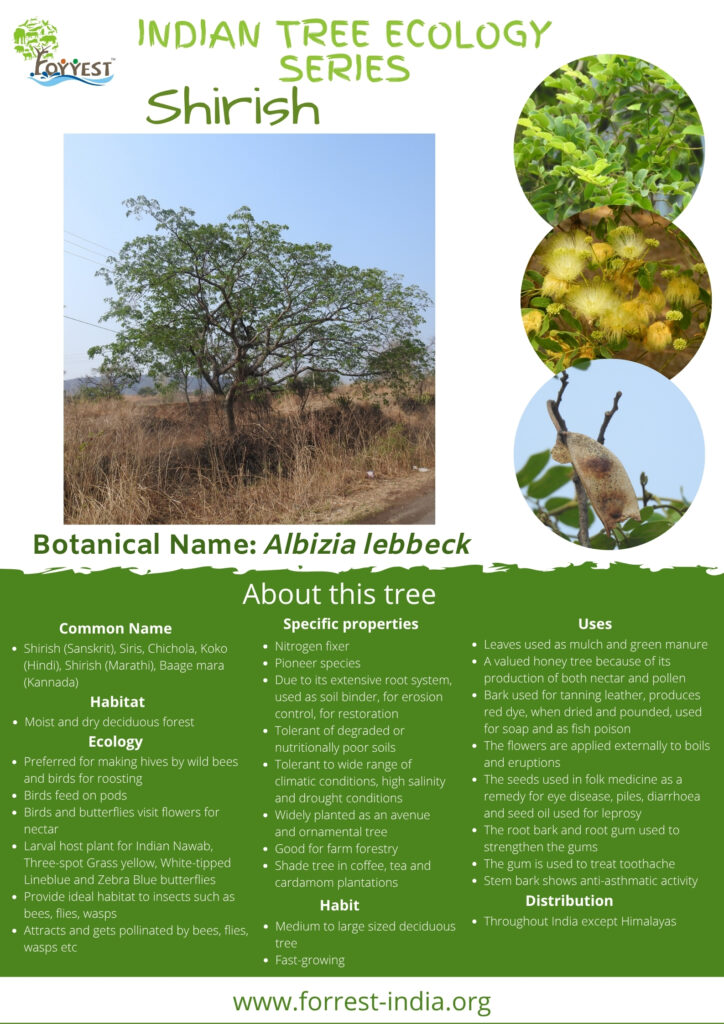
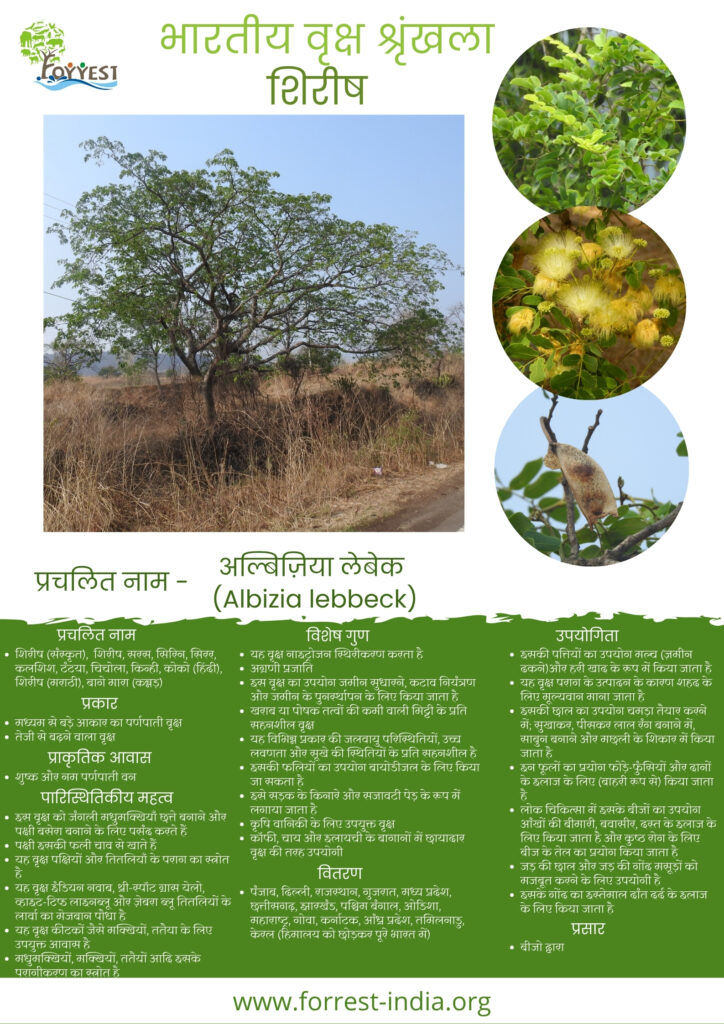
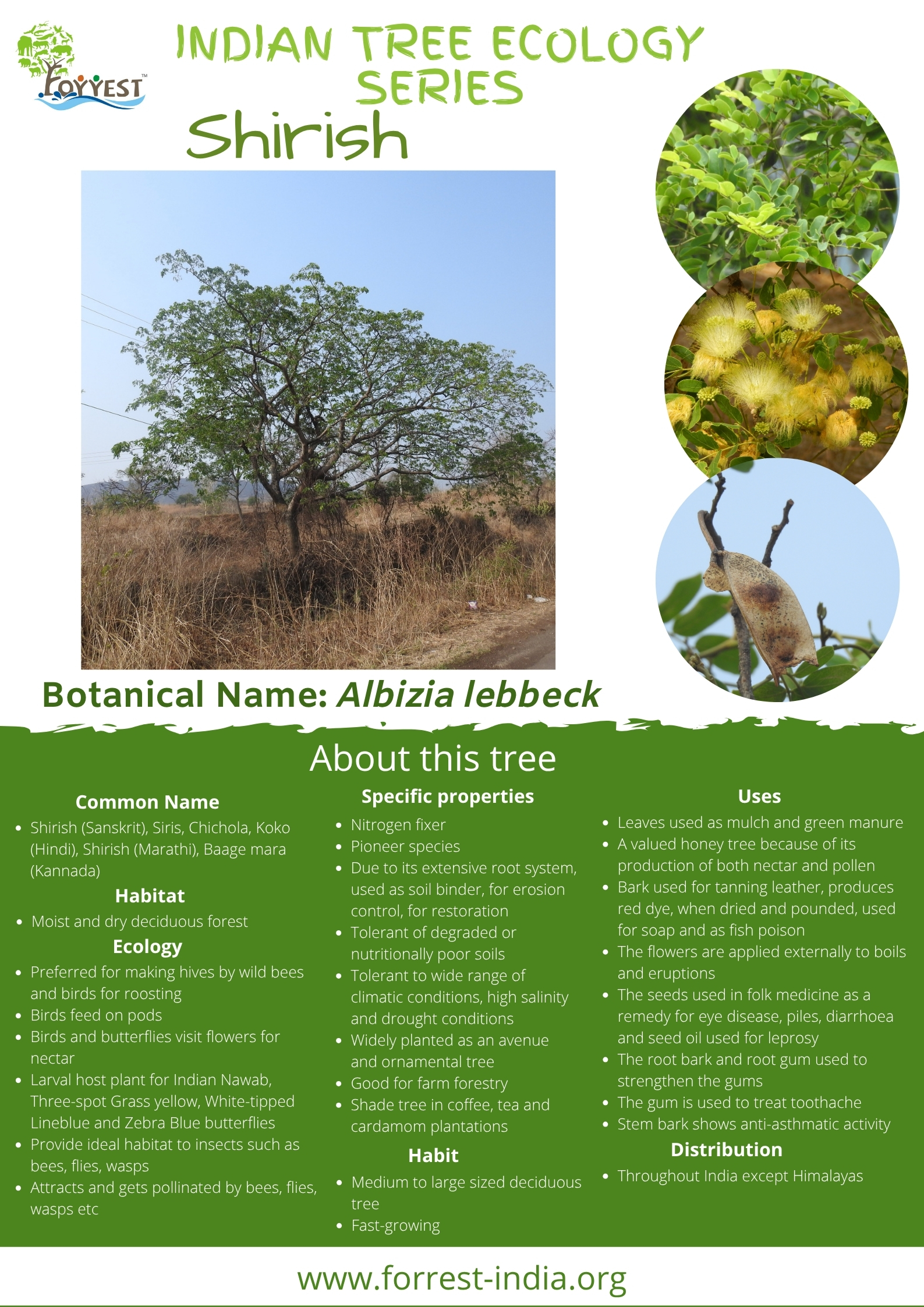
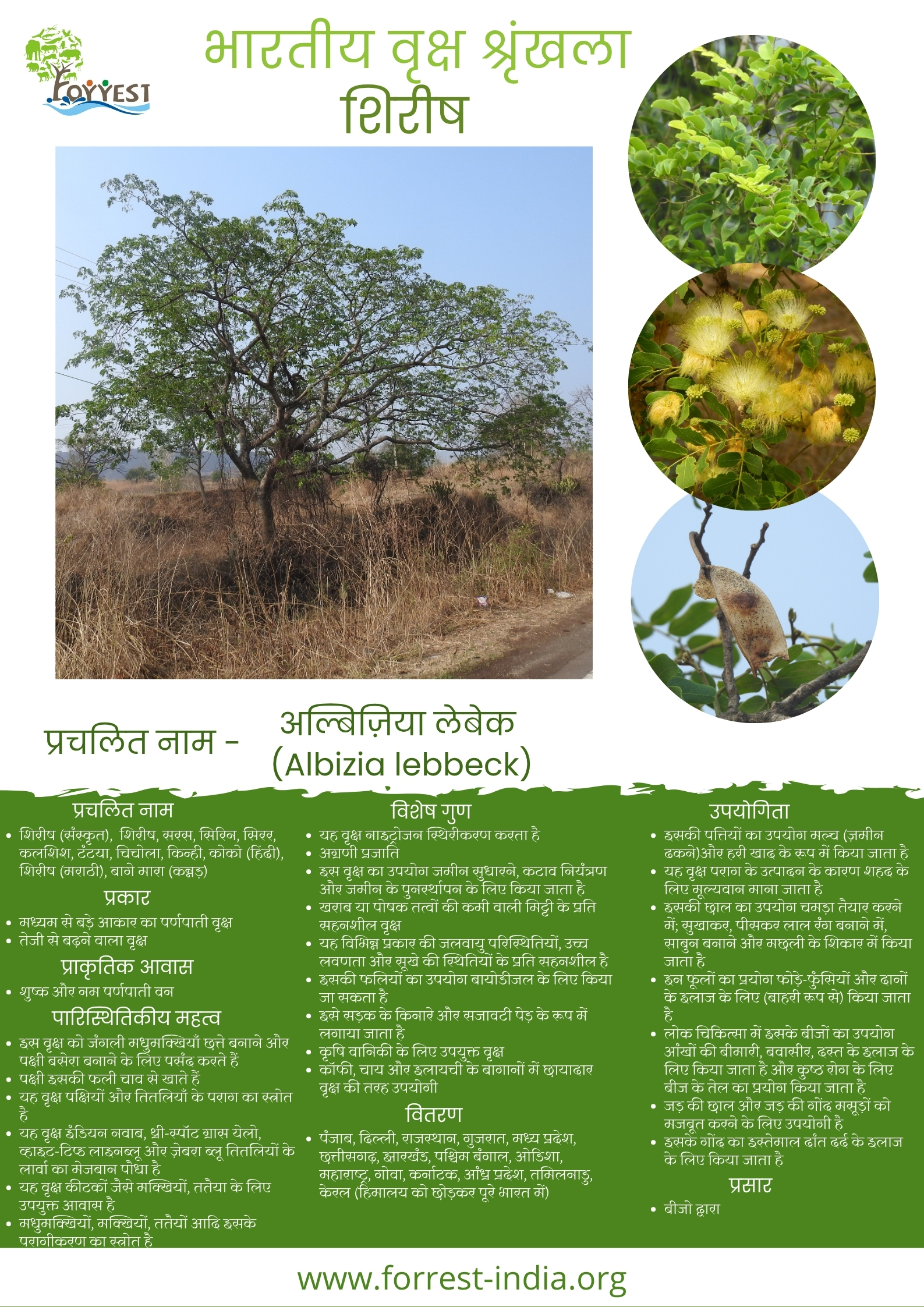
Common Name – Shirish (Sanskrit), Siris, Siras, Sirin, Sirar, Kalshish, Tantia, Chichola, Kinhi, Koko (Hindi), Shirish (Marathi), Baage mara (Kannada)
Distribution – Madhya Pradesh, Chhattisgarh, Delhi, Karnataka, Odisha, Maharashtra, West Bengal, Kerala, Goa, Rajasthan, Gujrat Throughout India except Himalayas
Habit
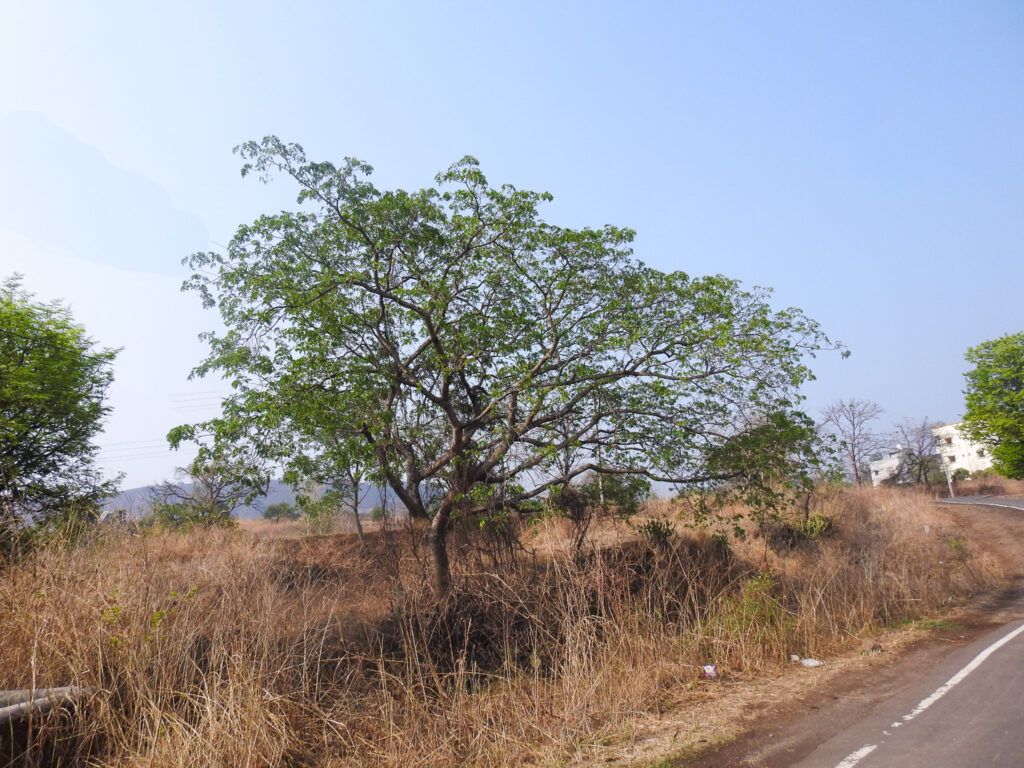
Medium to large sized deciduous tree
Fast-growing
Habitat
Moist and dry deciduous forest
Specific properties
Nitrogen fixer
Pioneer species
Due to its extensive root system, used as soil binder, for erosion control, for restoration
Tolerant of degraded or nutritionally poor soils
Tolerant to wide range of climatic conditions, high salinity and drought conditions
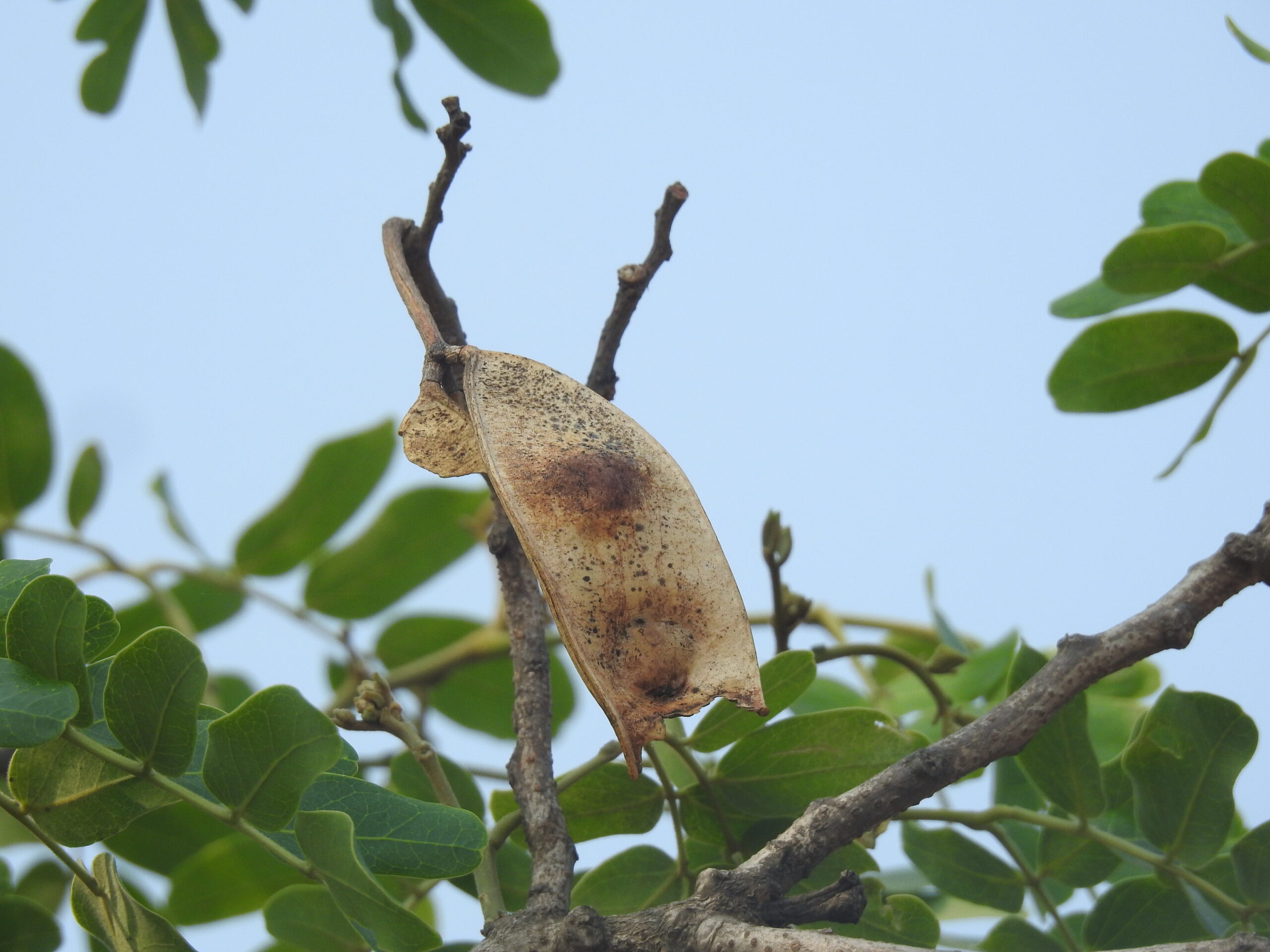
The seed pods have potential of bioenergy as biodiesel
Widely planted as an avenue and ornamental tree
Good for farm forestry
Shade tree in coffee, tea and cardamom plantations
Ecology
Preferred for making hives by wild bees and birds for roosting
Birds feed on pods
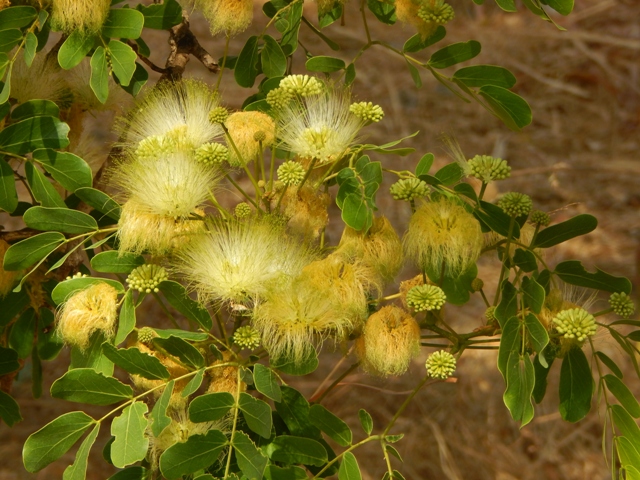
Birds and butterflies visit flowers for nectar
Larval host plant for Indian Nawab, Three-spot Grass yellow, White-tipped Lineblue and Zebra Blue butterflies
Provide ideal habitat to insects such as bees, flies, wasps
Attracts and gets pollinated by bees, flies, wasps etc
Uses
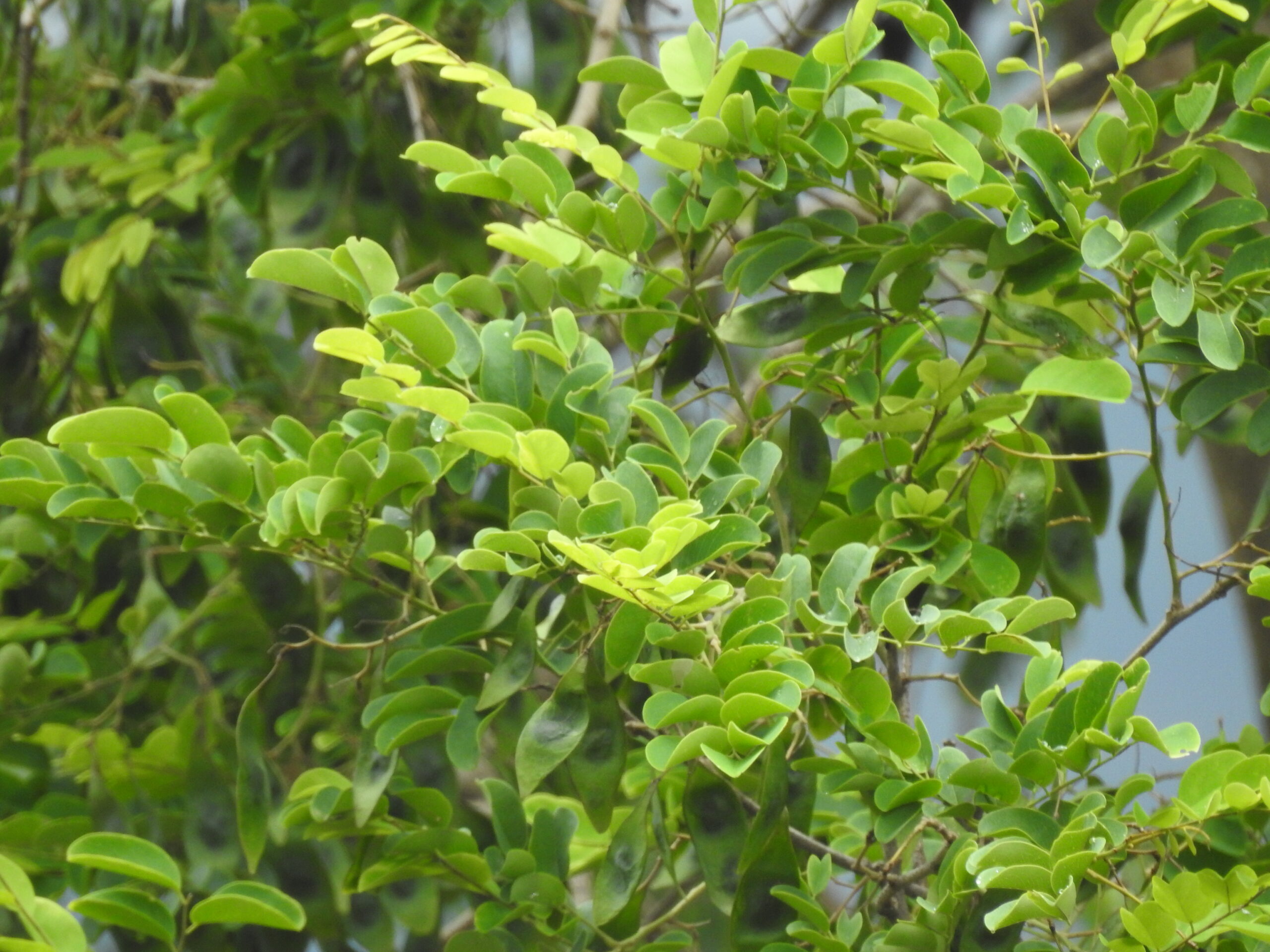
Leaves used as mulch and green manure
A valued honey tree because of its production of both nectar and pollen
Bark used for tanning leather, produces red dye, when dried and pounded, used for soap and as fish poison
The flowers are applied externally to boils and eruptions
The seeds used in folk medicine as a remedy for eye disease, piles, diarrhoea and seed oil used for leprosy
The root bark and root gum used to strengthen the gums