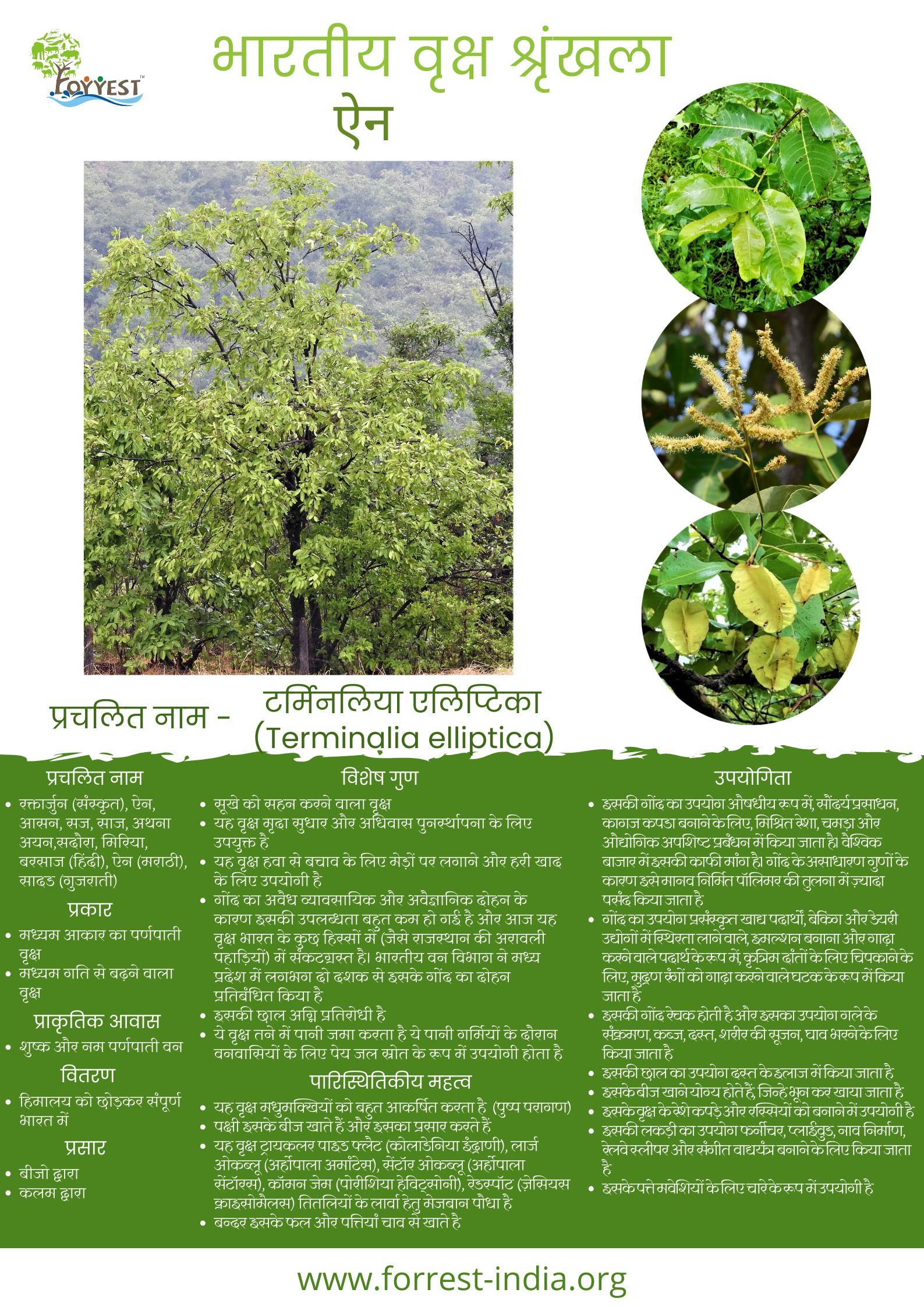
Common Name – Raktarjun (Sanskrit), Ain, Asana, Saaj, Saja, Athna, Sadora, Miriya, Barsaaj (Hindi), Ain (Marathi), Sadad (Gujrati)
Distribution
Uttar Pradesh, Bihar, West Bengal, Madhya Pradesh, Orrisa, Maharashtra, Goa, Karnataka, Andhra Pradesh, Kerala
Habit
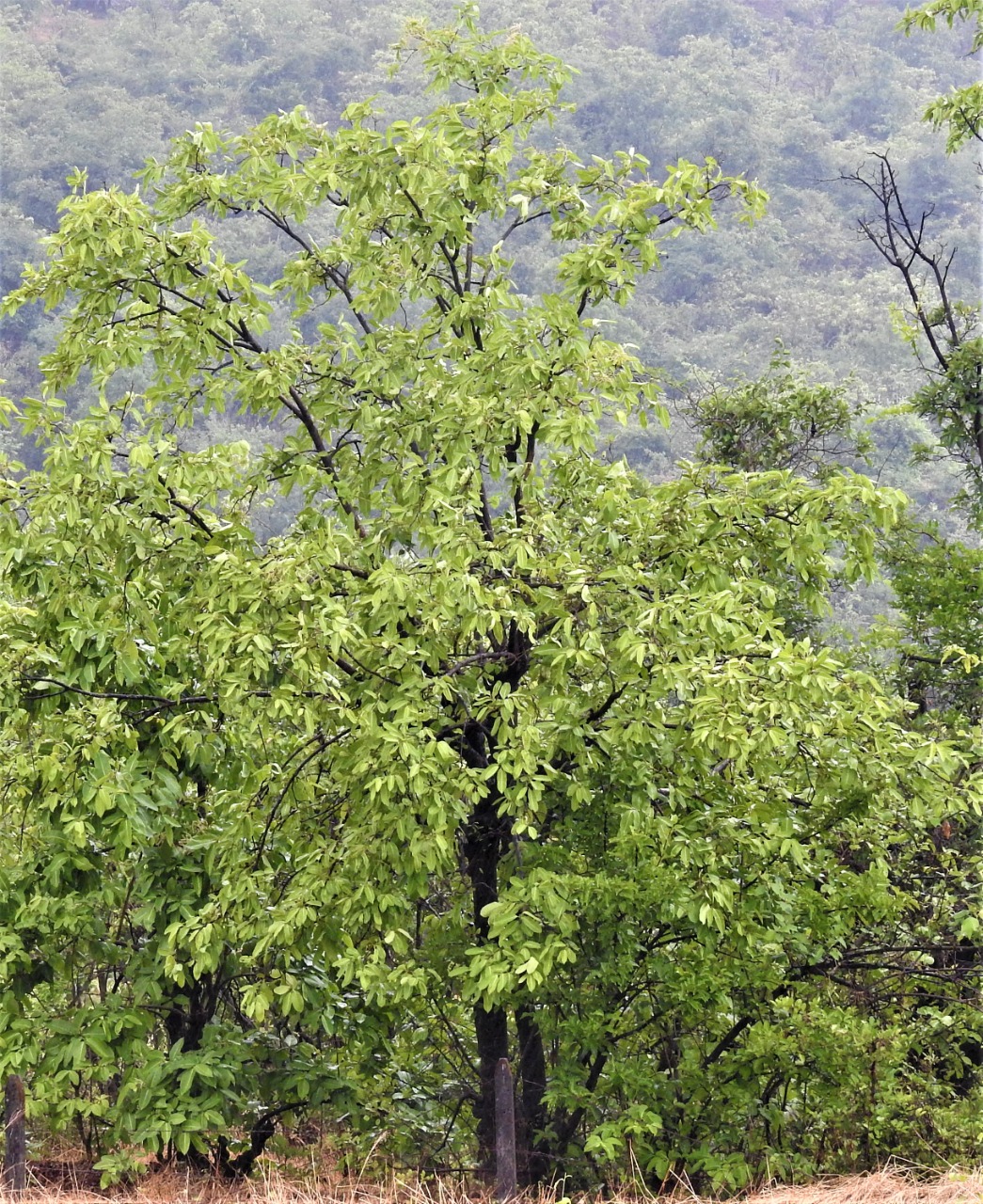
Medium sized deciduous tree
Moderate growth
Habitat
Dry and moist deciduous forests
Specific Properties
Drought tolerant
Preferred for soil regeneration and habitat restoration
Good to plant on bunds for wind break and green manure
Unscientific tapping of gum, illegal commercial exploitation has resulted in critically low abundance and plant is now endangered in some states of India (e.g. the Aravalli hills of Rajasthan). Tapping of gum is banned by Forest Department for about two decades in Madhya Pradesh, India
Bark is fire-resistant
Water stored in the stem is often tapped and used as a source of potable water in the summer by forest dwelling communities.
Ecology
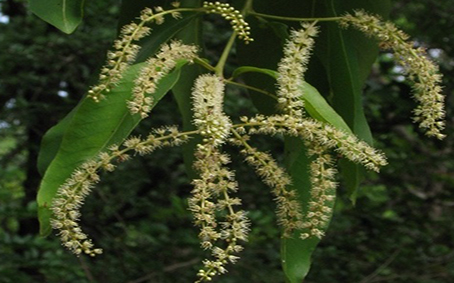
Attract lots of Honeybees (flower pollination)
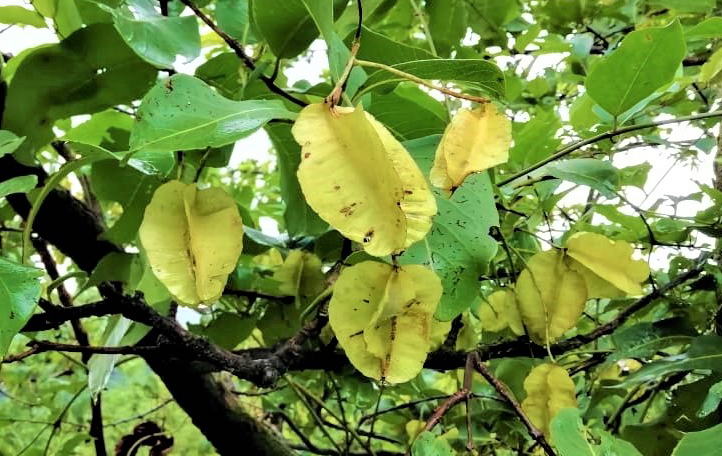
Birds feed on seeds and act as dispersal agents
The leaves are used as food by Antheraea paphia (silkworms), which produces tassar silk
Larval host plant for Tricolur Pied Flat (Coladenia Indrani), Large Oakblue (Arhopala amantes), Centaur Oakblue (Arhopala centaurus), Common Gem (Poritia hewitsoni), Redspot (Zesius chrysomallus)
Uses
Gum used in pharma, health care, food, cosmetics, paper-textile, composite fibre, leather industries and industrial waste treatment. It is in great demand in global market. Preferred over synthetic polymers due to exceptional properties of gum
Gum is used as stabilizer, emulsifier, and thickener in processed foods, baking, and dairy industries as denture adhesive, thickening agent for printing dyes, in cosmetics
Gum is laxative and used for treatment of throat infections, constipation, diarrhoea, body swelling, wound healing
The bark is used medicinally against diarrhoea
The bark and especially the fruit yield pyrogallol and catechol to dye and tan leather.
Seeds are edible, eaten roasted
Fibre from tree is used to make cloth and ropes
The wood is used for furniture, plywood, boat-building, railway sleeper, and for musical instruments