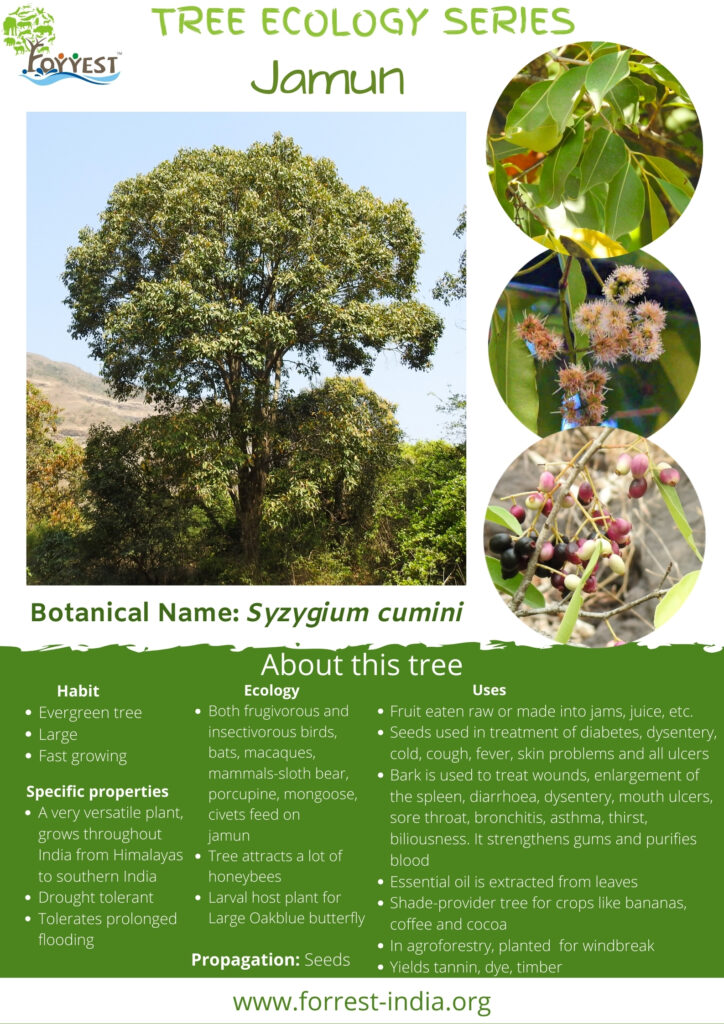
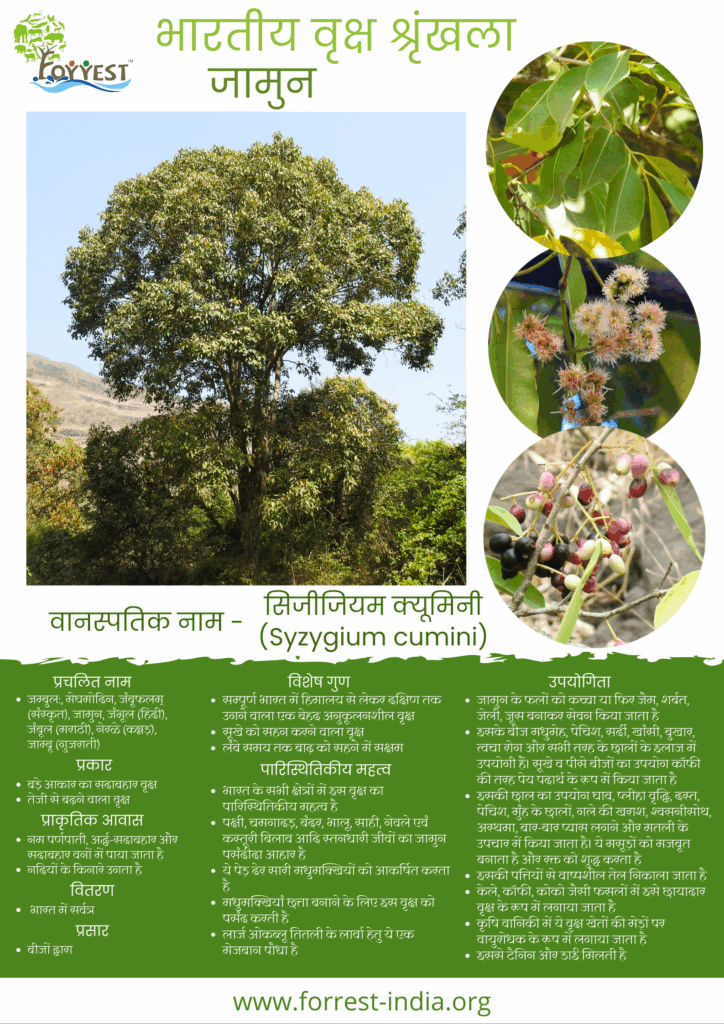
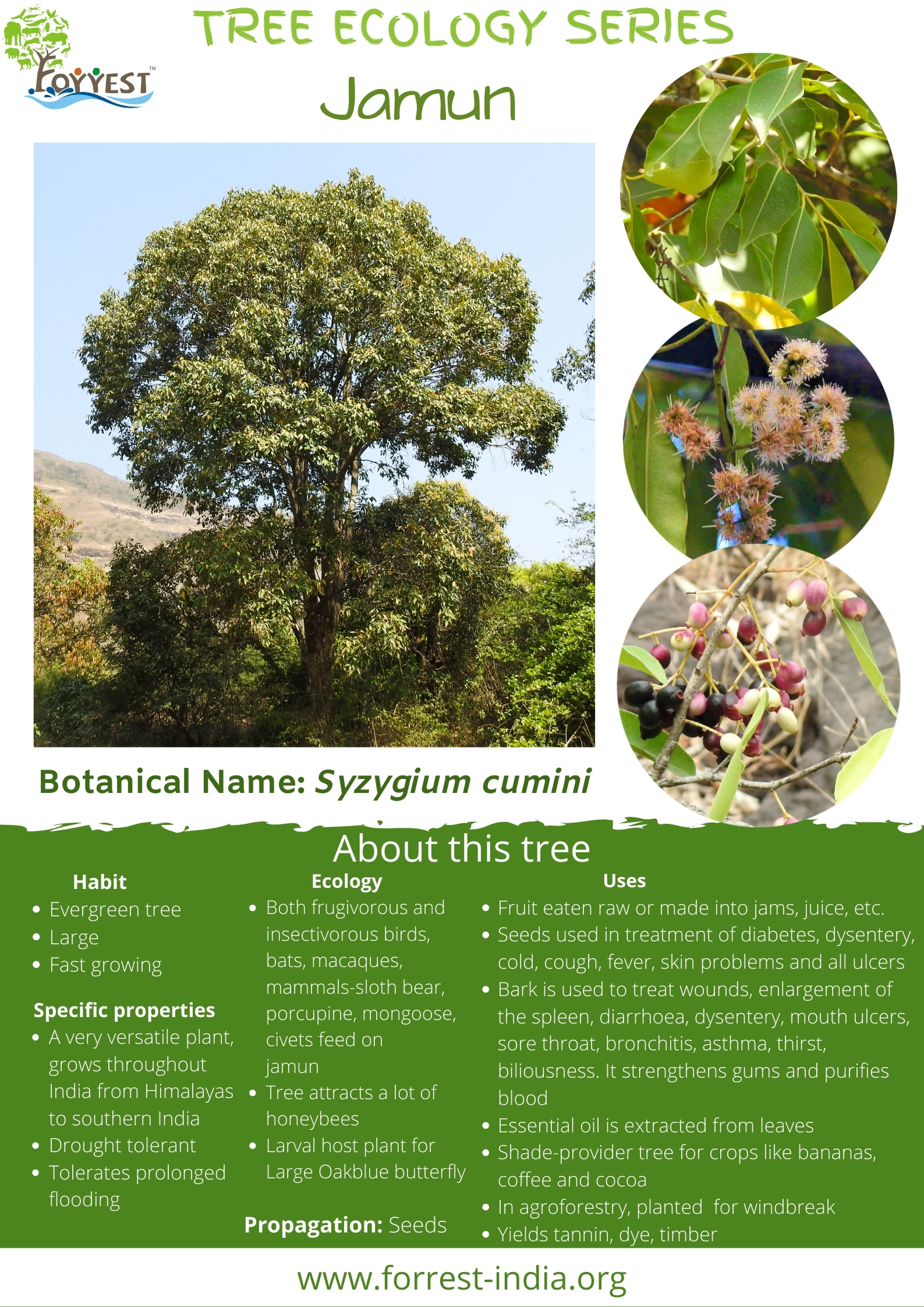
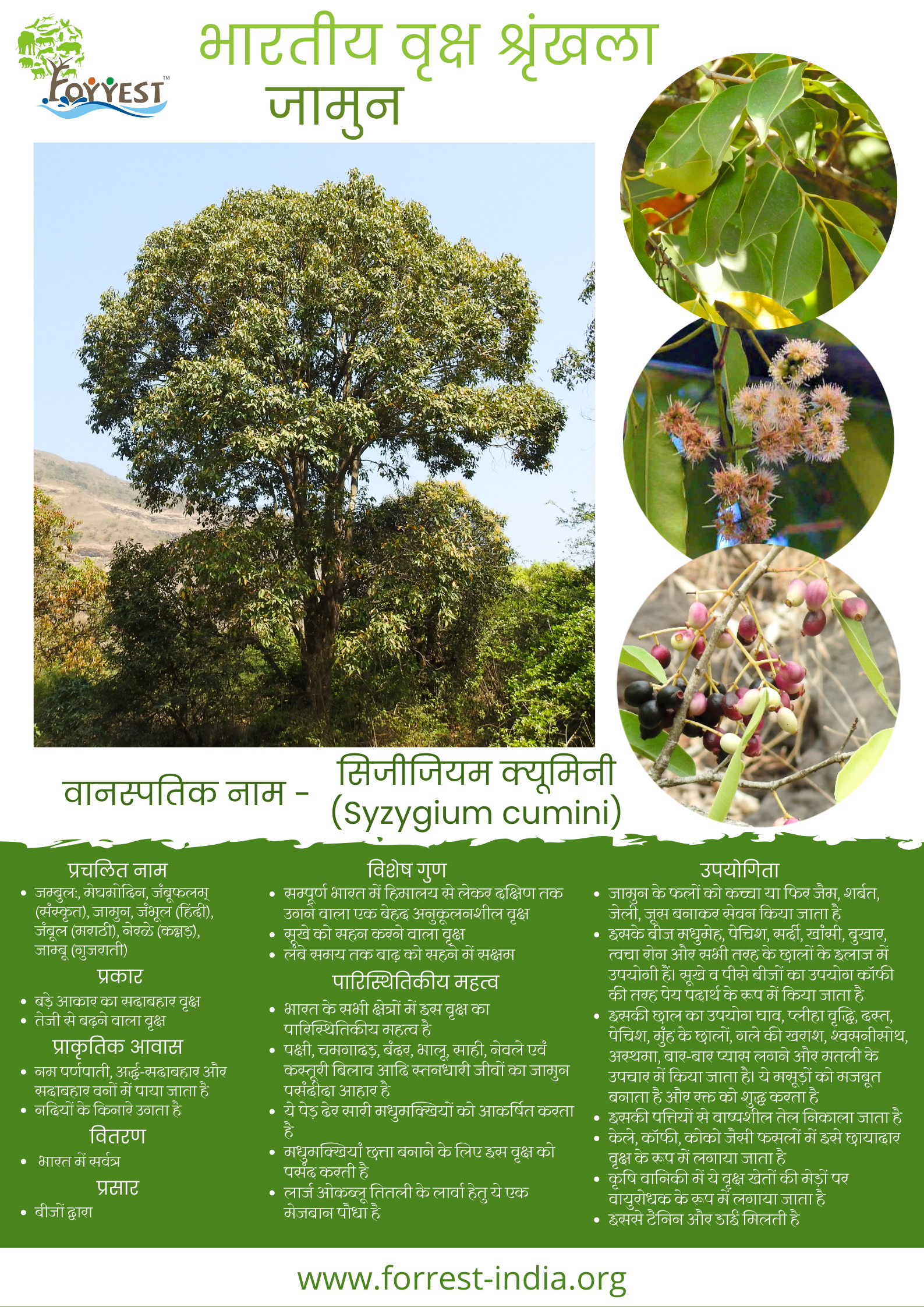
Common Name – Jambulah, Meghamodini (Sanskrit) Jamun, Jambhul, Jamdi (Hindi), Jambool (Marathi), Nerale (Kannada), Jambu (Gujrati)
Habit
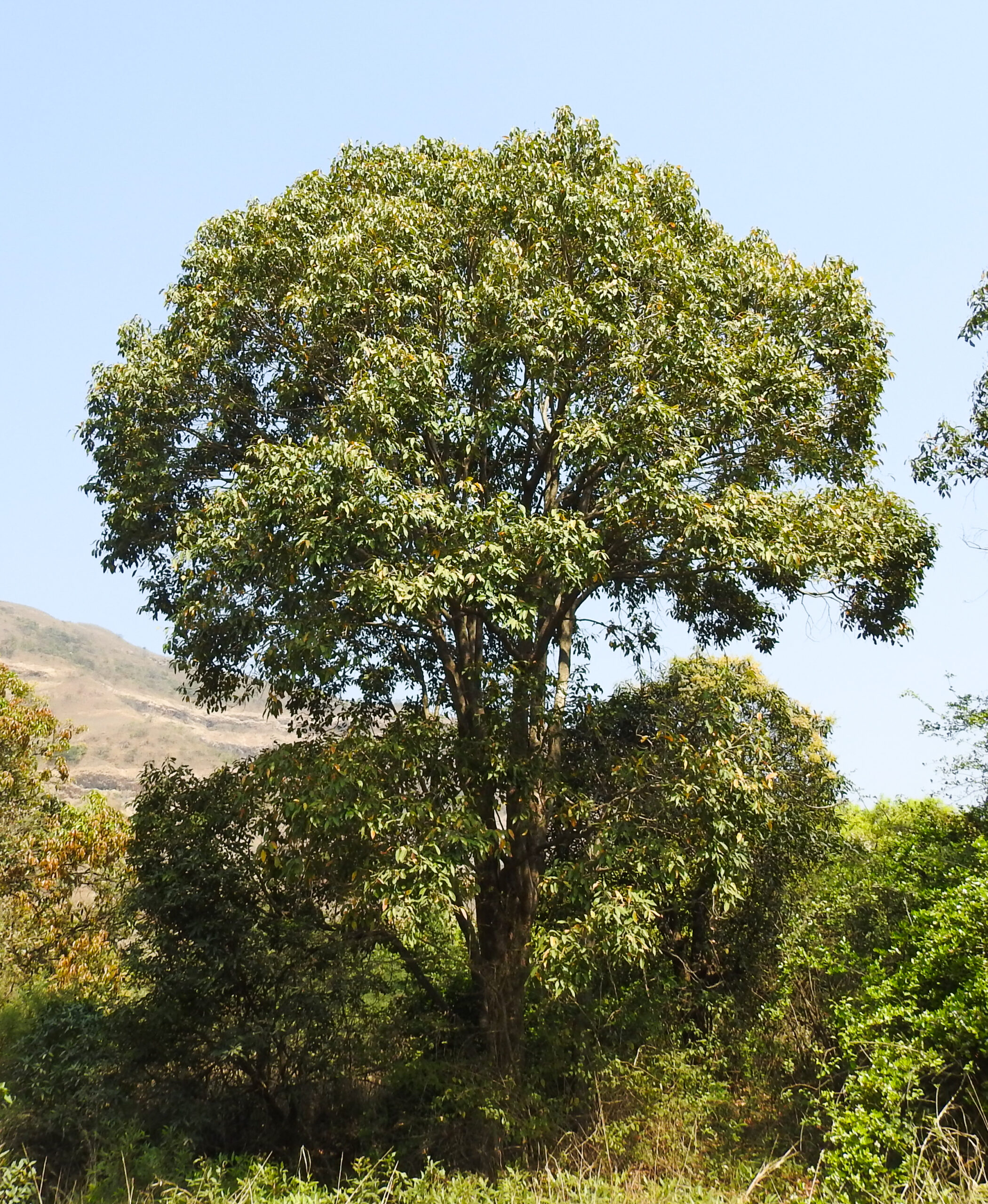
Large evergreen Tree
Fast growing
Habitat
Moist deciduous, Semi-green and ever-green forests
Near streams rivers
Distribution – Throughout India
Specific Properties
A very versatile plant, grows throughout India from Himalayas to southern India
Drought tolerant
Tolerates prolonged flooding
Ecology
Ecologically important tree in all parts of India
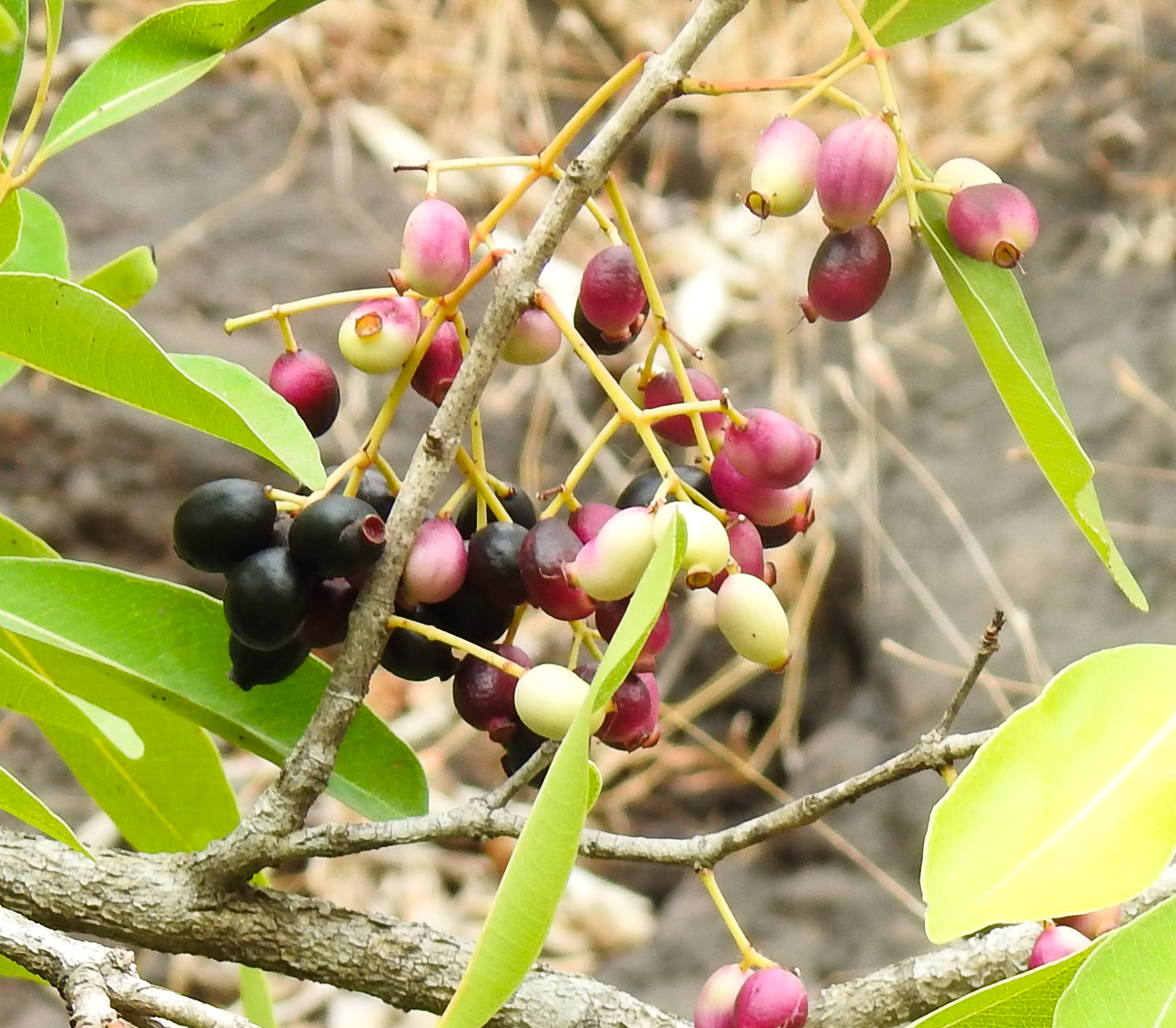
Both frugivorous and insectivorous birds, bats, macaques, mammals-sloth bear, porcupine, mongoose, civets feed on jamun
Tree attracts a lot of honeybees
Larval host plant for Large Oakblue butterfly
Uses
Fruit eaten raw or made into jams, sherbet, jellies, juice
Seeds used in treatment of diabetes, dysentery, cold, cough, fever, skin problems and all types of ulcers. Dried and grounded seeds are used as beverage (like coffee)
Bark is used to treat wounds, enlargement of the spleen, diarrhoea, dysentery, mouth ulcers, sore throat, bronchitis, asthma, thirst, biliousness. It strengthens gums and purifies blood
Essential oil is extracted from leaves
Shade-provider tree for crops like bananas, coffee and cocoa
In agroforestry, planted on farm bund for windbreak