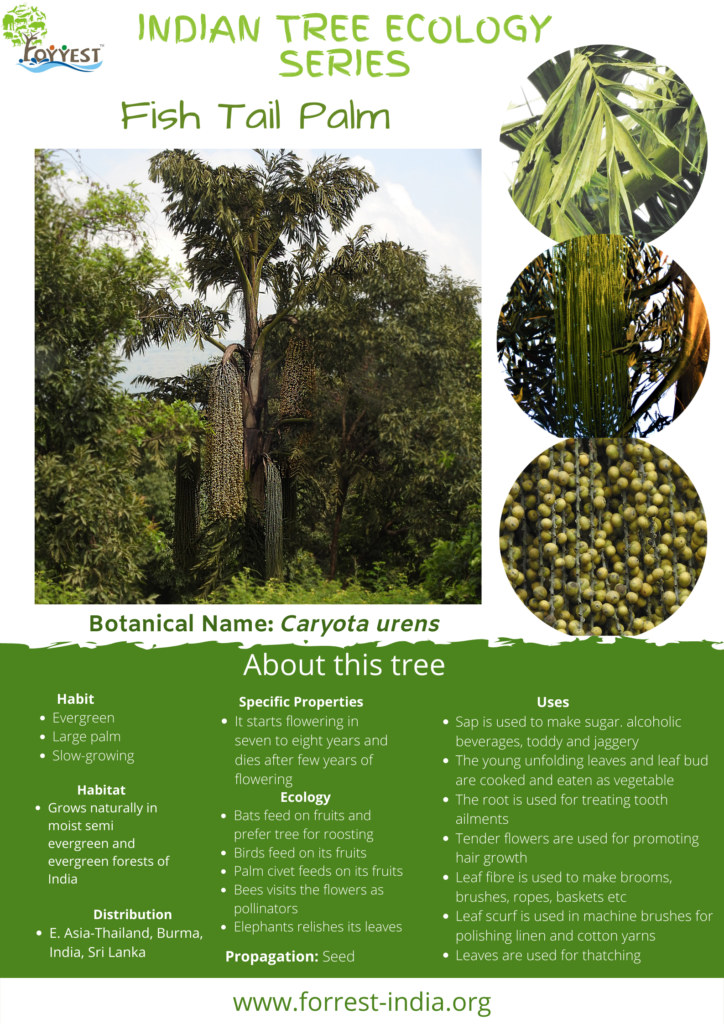
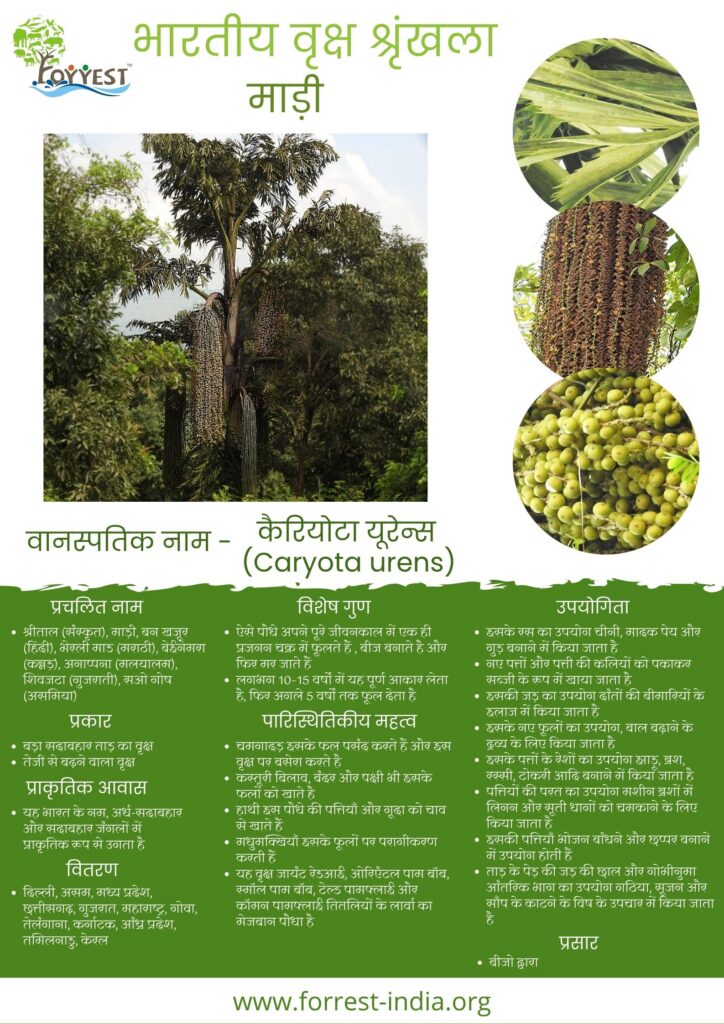
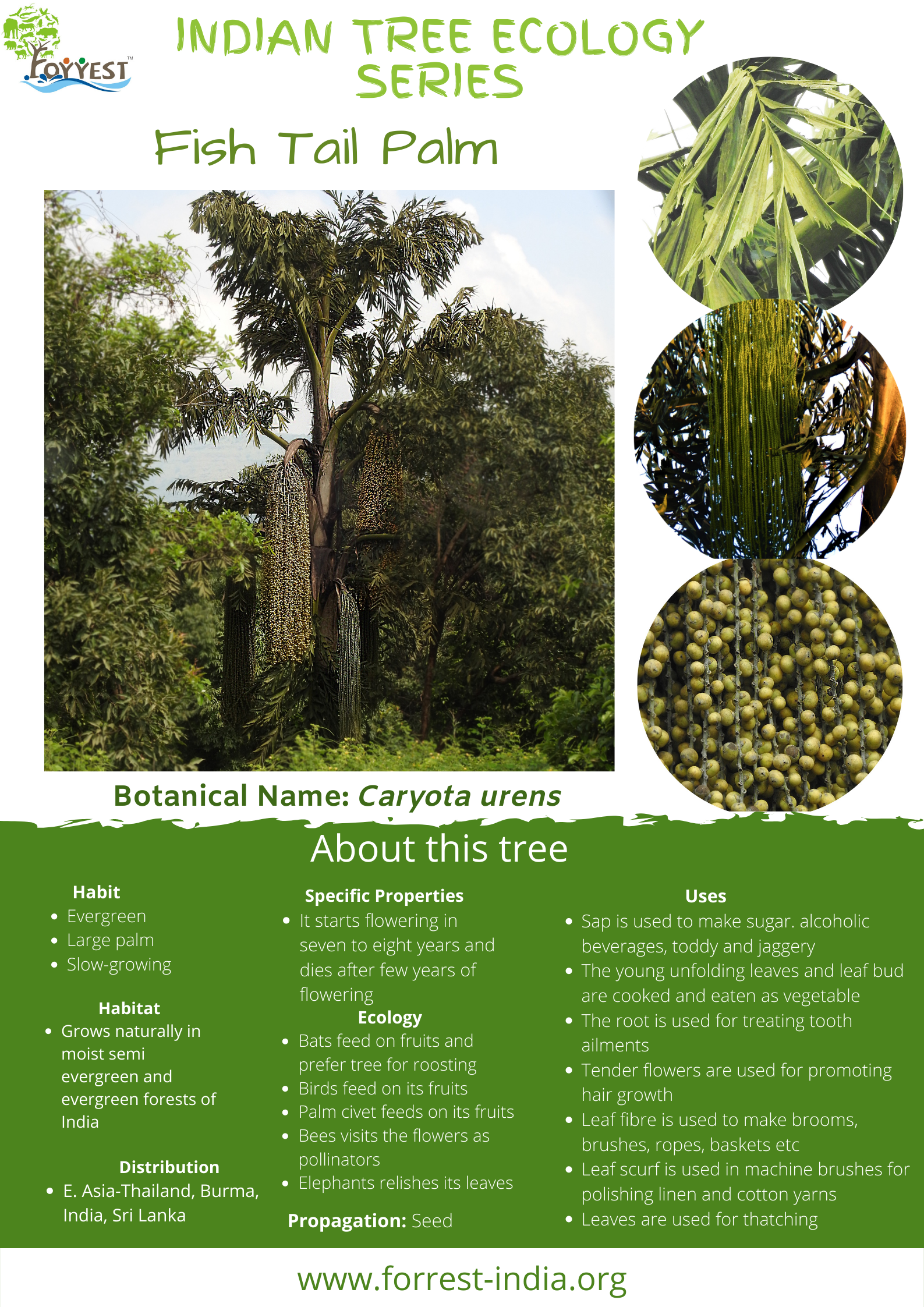
Common Name – Sritalah (Sanskrit), Madi, Bankhajur (Hindi), Bherli maad (Marathi) Bainemara (Kannada), Anappana (Malayalam), Shivjata (Gujarati), Sao gosh (Assamese)
Distribution – Delhi, Assam, Madhya Pradesh, Chhattisgarh, Gujarat, Maharashtra, Goa, Telangana, Karnataka, Andhra Pradesh, Tamil Nadu, Kerala
Habit
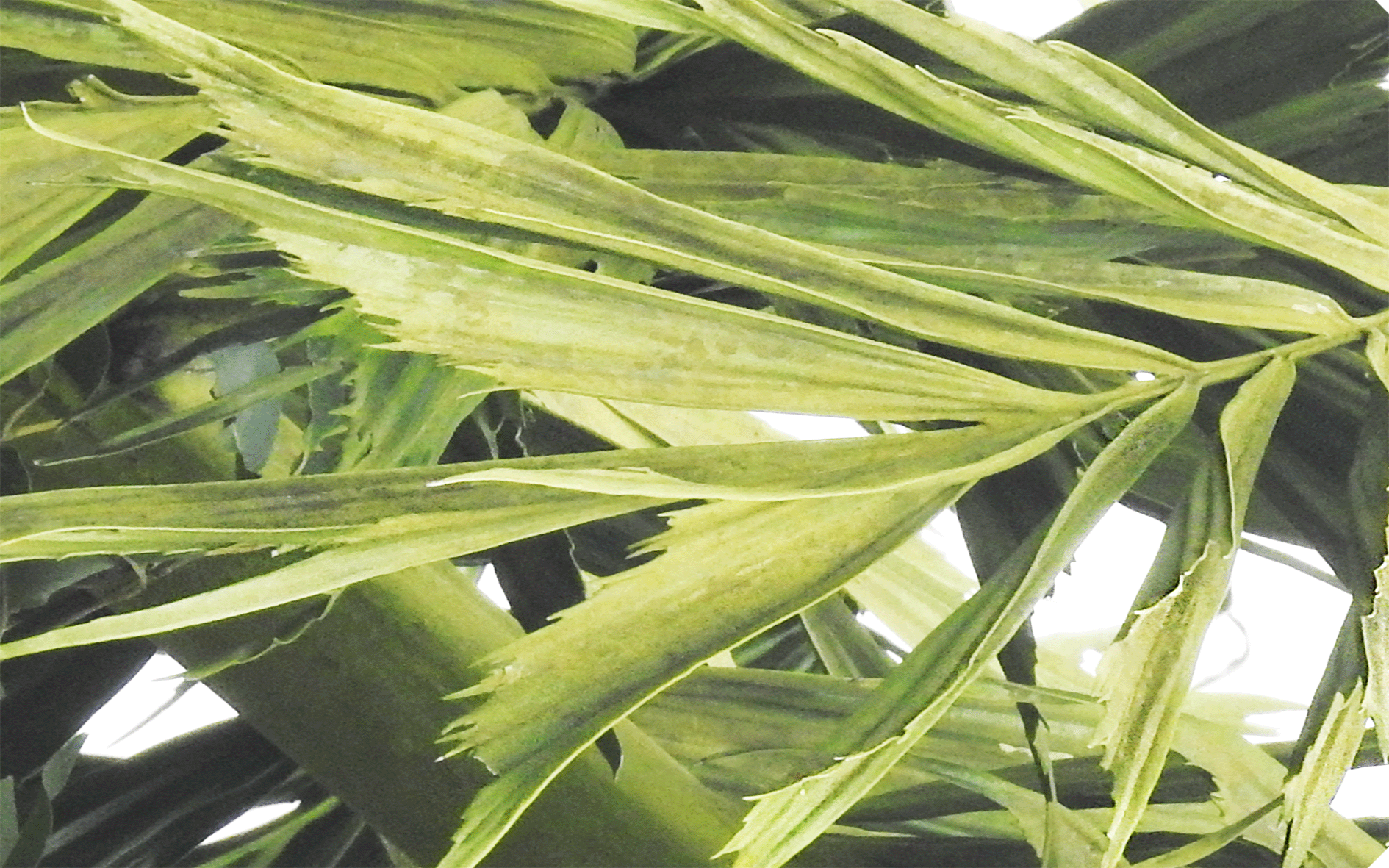
Large evergreen palm
Fast growing
Habitat
Grows naturally in moist, semi evergreen and evergreen forests of India
Specific properties
A monocarpic species: living for several years but dying once it has flowered
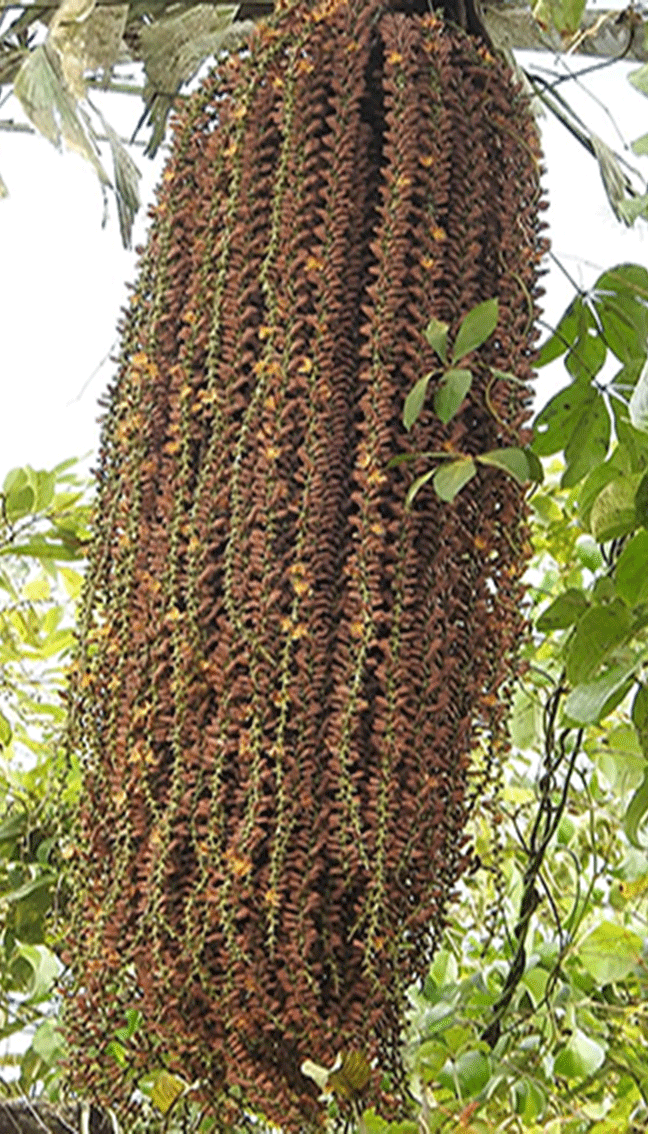
It attains full size in about 10 – 15 years, and then flowers for another 5 years. It flowers from the top down, and once the last fruit on the bottom inflorescence matures, the plant dies
Ecology
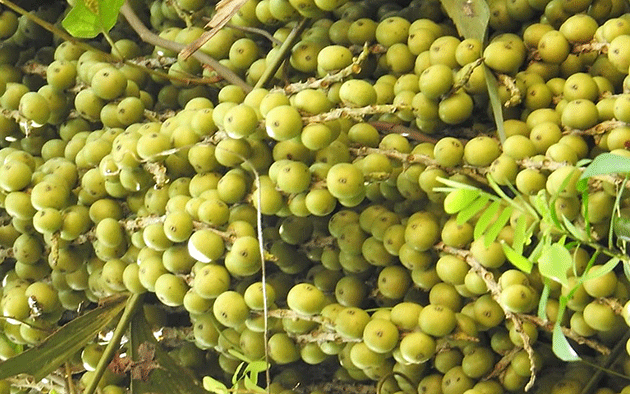
Bats feed on fruits and prefer tree for roosting
Palm civet, birds feed on its fruits
Bees visit the flowers as pollinators
Larval host plant of Giant Redeye, Oriental Palm Bob, Small Palm Bob, Tailed Palmfly, Common Palmfly
Elephants feed on leaves and pulp of this plant
Uses
Sap is used to make sugar. alcoholic beverages and jaggery
The young unfolding leaves and leaf bud are cooked and eaten as vegetable
The root is used for treating tooth ailments
Tender flowers are used for promoting hair growth
Leaf fibre is used to make brooms, brushes, ropes, baskets etc
Leaf scurf is used in machine brushes for polishing linen and cotton yarns
Leaves are used for food packaging and thatching
The root bark and the cabbage of the palm are used for the treatment of rheumatics, welling’s and snake-bite poisoning