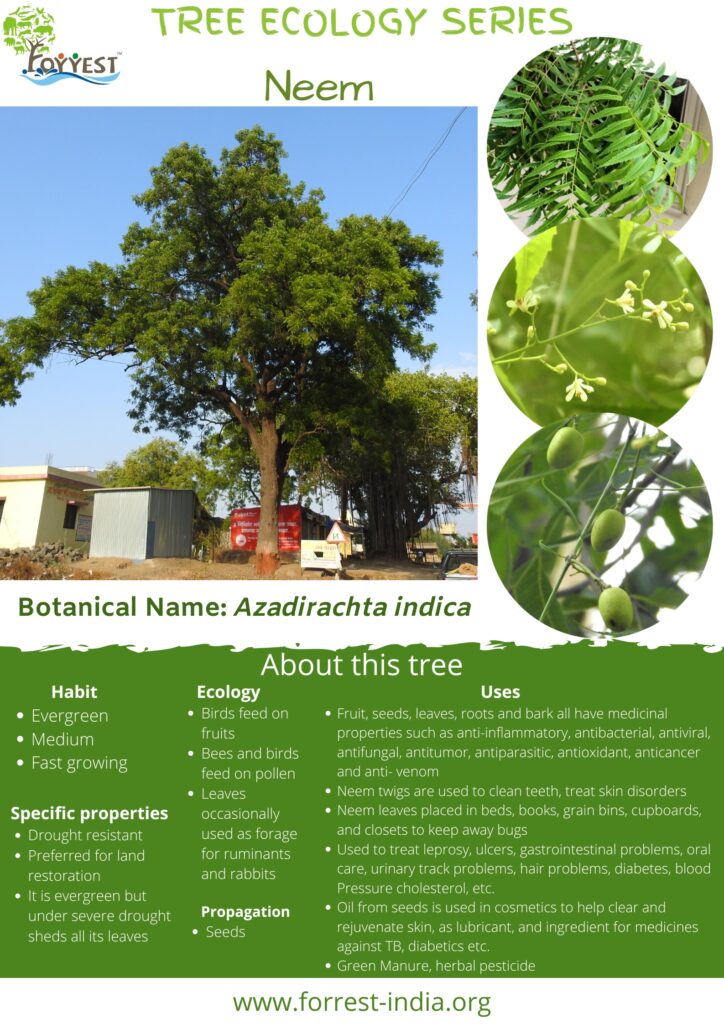
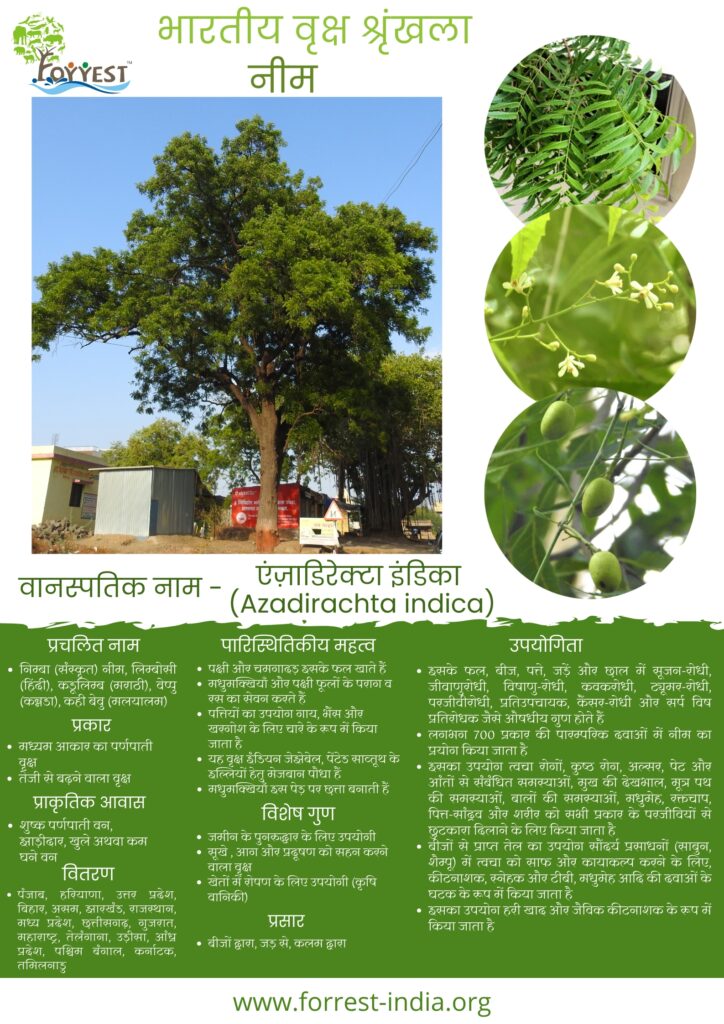
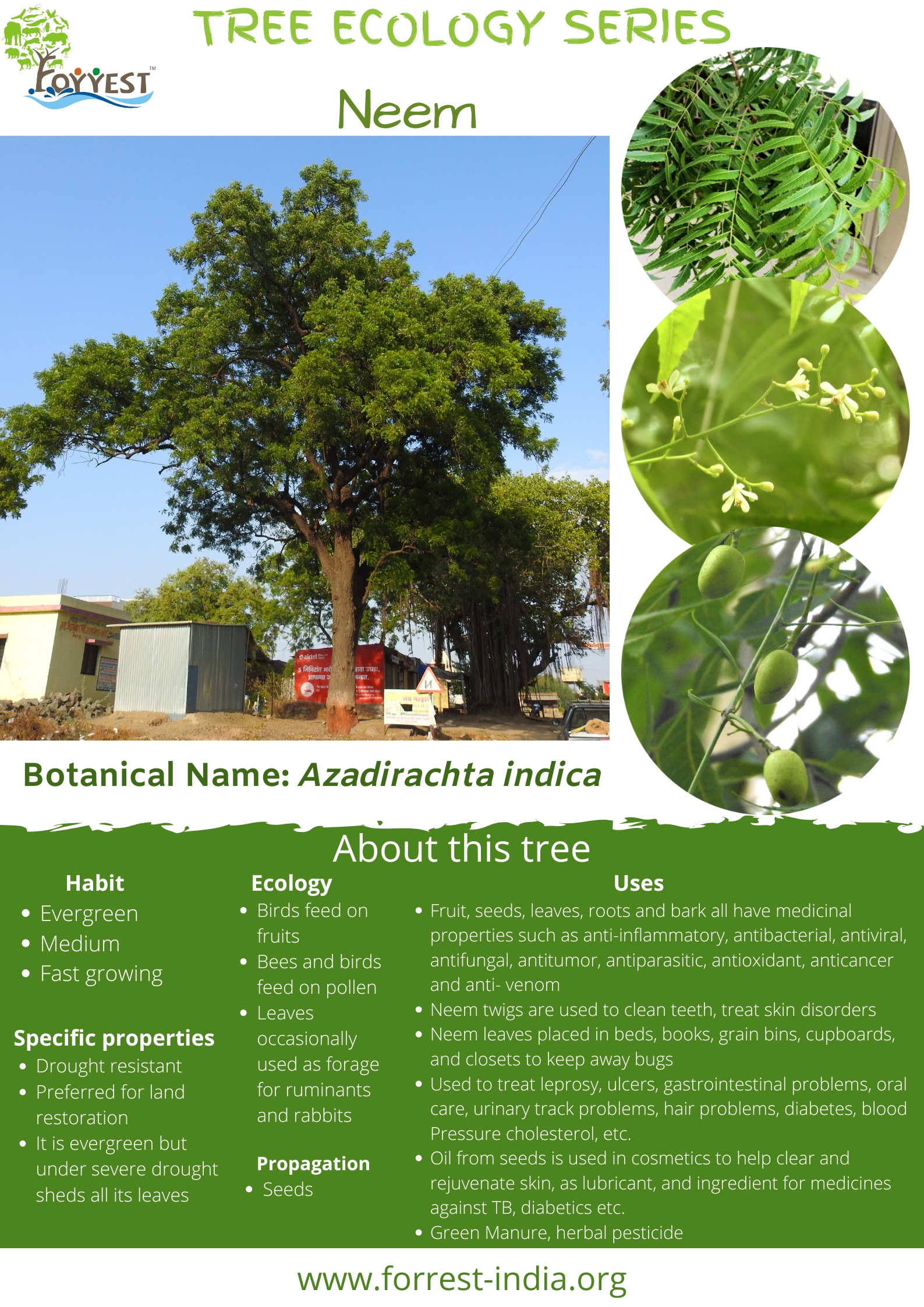
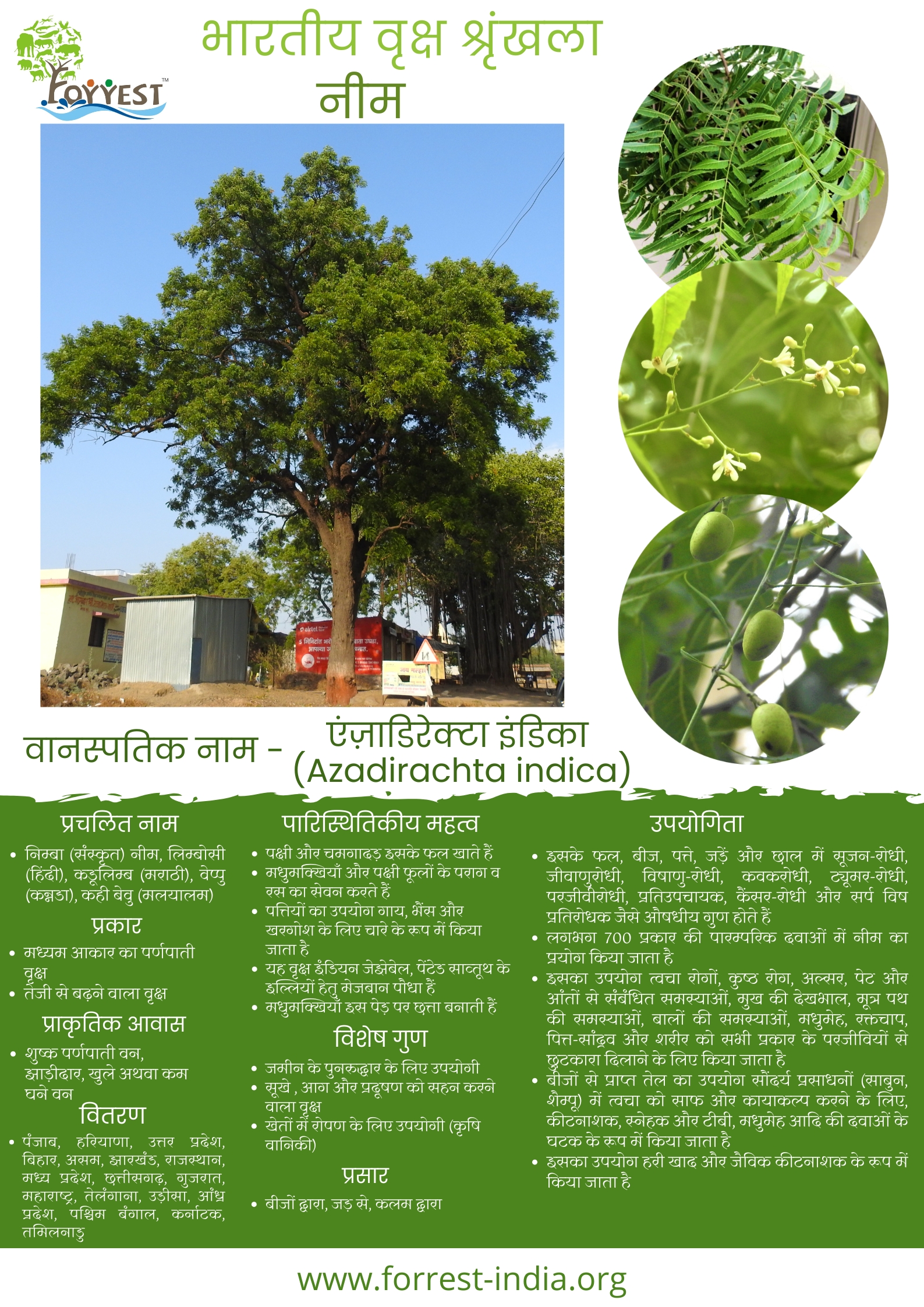
Common Name – Nimba (Sanskrit), Neem, Limbosi (Hindi), Kadulimba (Marathi), Kahi Bevu (Kannada), Veppu (Malayalam), Limdo (Gujrati)
Distribution – Punjab, Haryana, Uttar Pradesh, Bihar, Jharkhand, Rajasthan, Madhya Pradesh, Chhattisgarh, Gujarat, Maharashtra, Telangana, Orrisa, Andhra Pradesh, West Bengal, Tamil Nadu, Karnataka
Habit
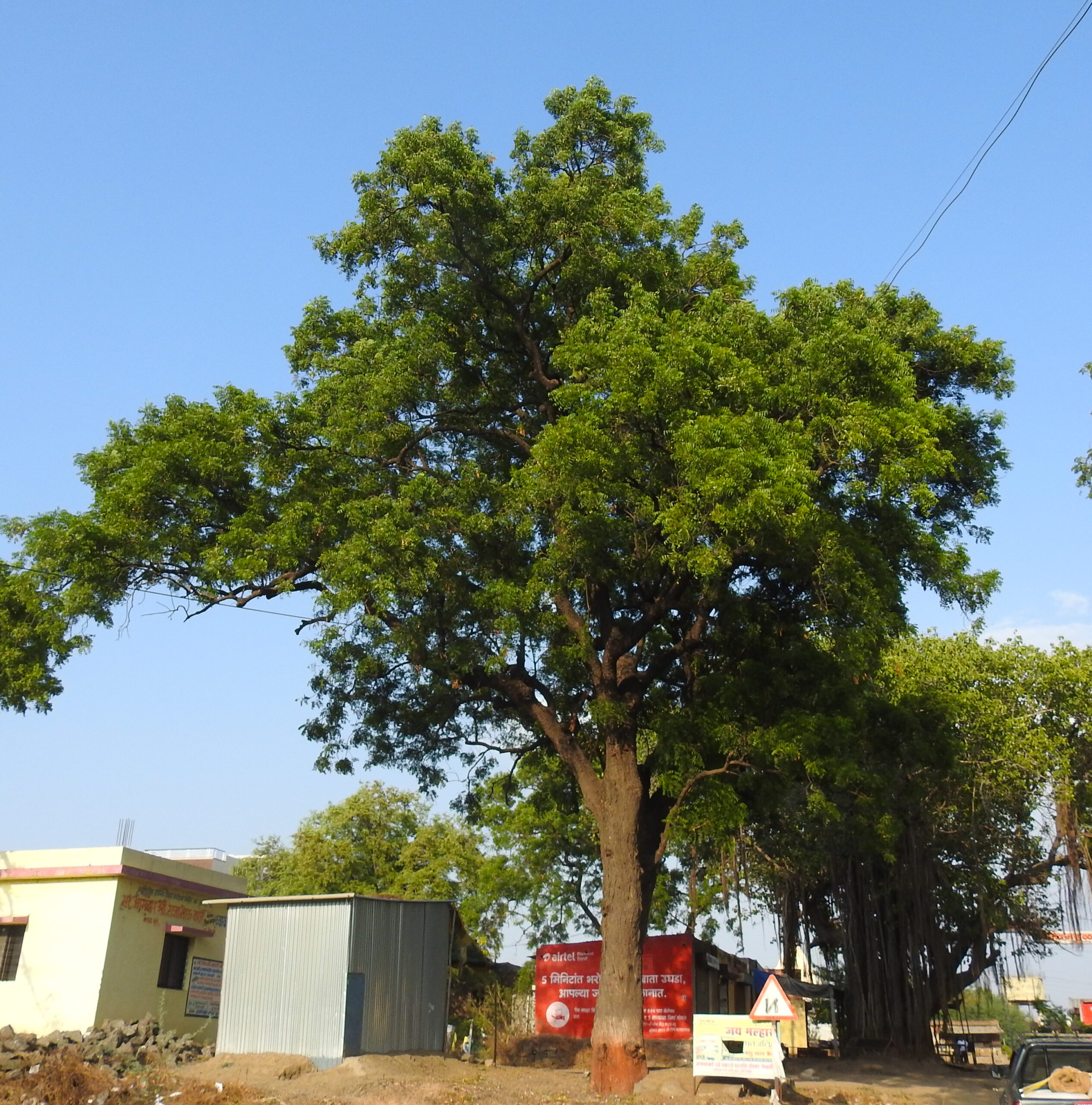
Medium sized deciduous tree
Fast-growing
Habitat
Dry deciduous forest, Scrub and open forest
Specific properties
Preferred for land restoration
Drought resistance
Tolerates high level of pollution
Fire tolerant
Good for planting in farms (agroforestry)
It is state tree of Andhra Pradesh
Ecology
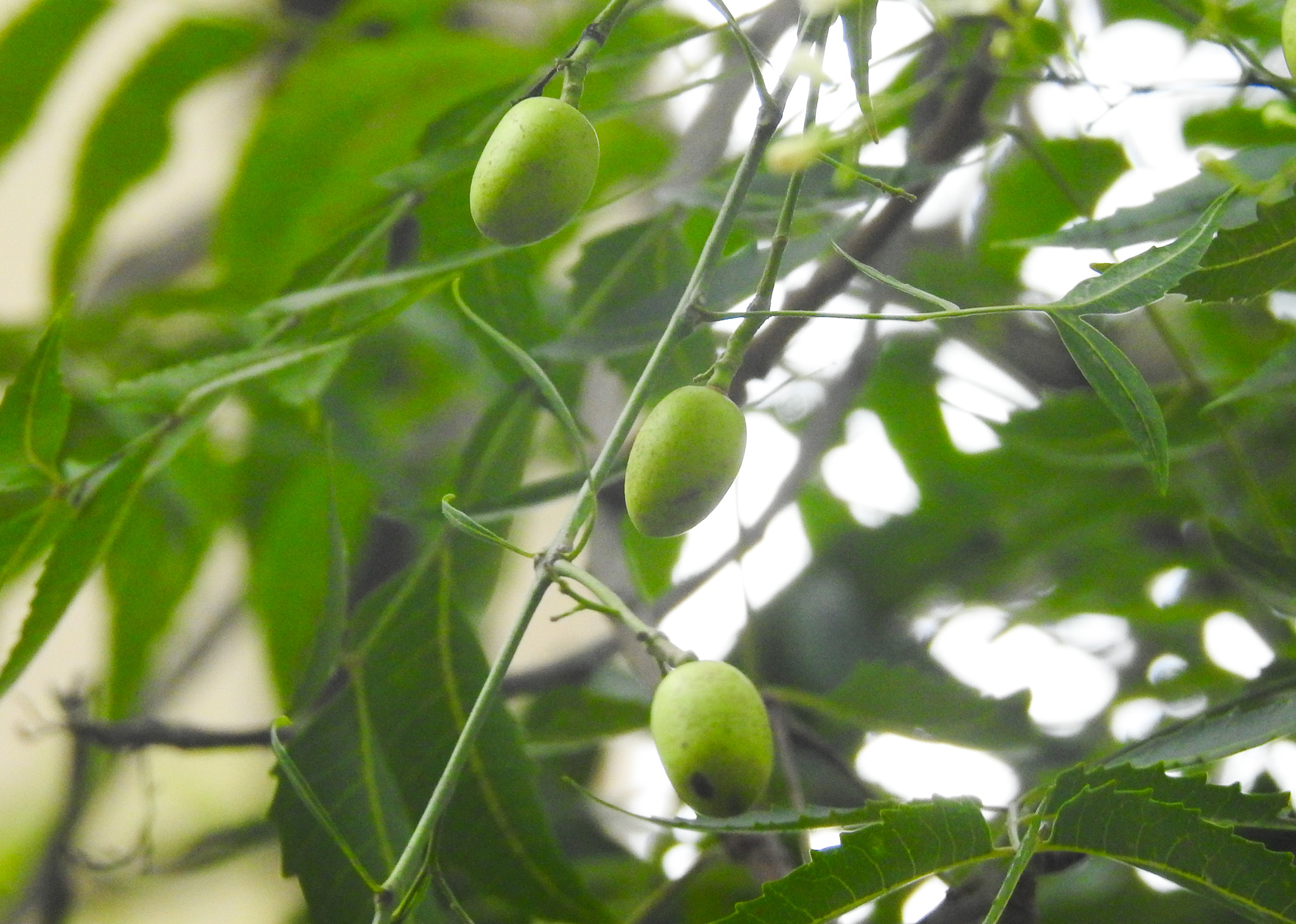
Birds and bats feed on fruits
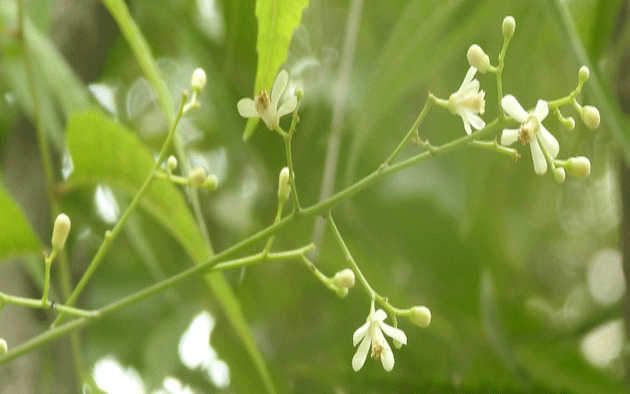
Bees and birds feed on pollen and nectar of flowers
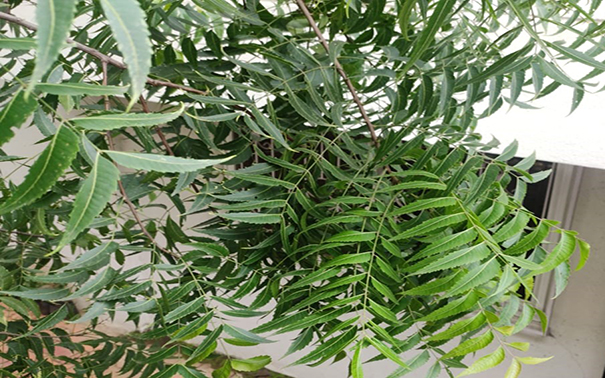
Leaves used as forage for ruminants and rabbits
Larval host plant of Indian jezebel, Painted sawtooth
Bees make hive on this tree
Uses
Its fruit, seeds, leaves, roots and bark all have medicinal properties such as anti-inflammatory, antibacterial, antiviral, antifungal, antitumor, antiparasitic, antioxidant, anticancer, and anti-snake venom
People clean their teeth with neem twigs, smeared skin disorders with neem leaf juice, taken neem tea as a tonic, and placed neem leaves in their beds, books, grain bins, cupboards, and closets to keep away bugs
About 700 herbal preparations based on neem are found in traditional medicines
It is used to treat skin diseases, leprosy, ulcers, gastrointestinal problems, oral care, urinary track problems, hair problems, diabetes, blood pressure, cholesterol and to rid the body of all forms of parasites
Oil from seeds is used in cosmetics (Soap, shampoo) to help clear and rejuvenate skin, as insecticide, lubricant, and ingredient for medicines against TB, diabetics etc